

Prepare, not panic: Local public health leaders talk Ebola misinformation ahead of Houston World Cup travels
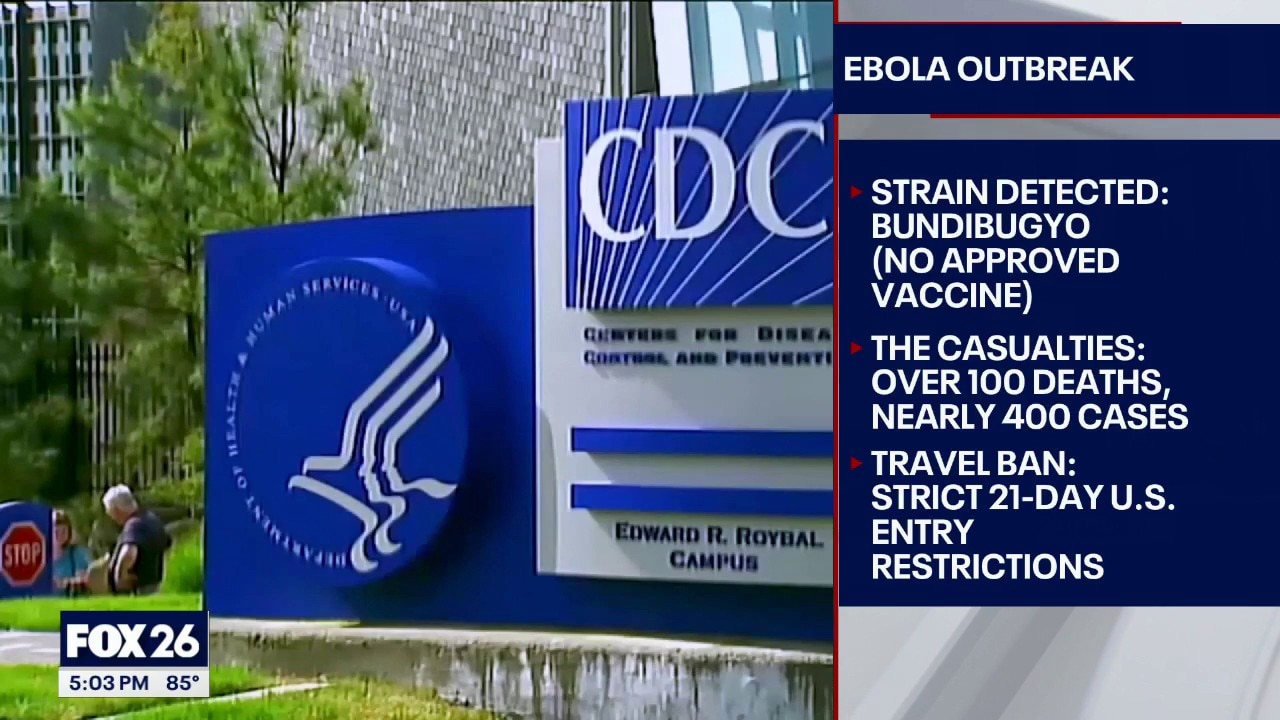
Tracking Ebola outbreak ahead of World Cup
The CDC and Homeland Security are locking down strict travel restrictions as they monitor a spreading Ebola outbreak in the Congo and Uganda. An American doctor who tested positive on Sunday is being medically evacuated to Germany. This comes as Houston prepares to serve as a World Cup host site for the Democratic Republic of the Congo. FOX 26's Sherman Desselle spoke with local and federal health officials on Monday.
HOUSTON - Federal and local health officials are adjusting defense lines following the confirmation of an Ebola outbreak in the Democratic Republic of the Congo and Uganda, sparking localized scrutiny as Houston prepares to serve as a World Cup host site for the DRC.
Local public health leaders talk Ebola misinformation
Captain Satish K. Pillai, M.D., M.P.H., the CDC’s Ebola response incident manager, confirmed an American medical aid worker in the DRC tested positive for Ebola late Sunday after developing symptoms over the weekend. The patient and other high-risk contacts are being medically evacuated to Germany via a joint effort by the CDC and the Department of State to secure faster points of care and shorter flight times.
Pillai described the outbreak as a "highly fluid situation" involving the rare Bundibugyo strain, marking only the third recorded outbreak of this specific species following occurrences in Uganda in 2007 and the DRC in 2015. Public health data indicates there are currently no FDA-approved vaccines or specific antiviral treatments available for the Bundibugyo strain.
The virus has spread to major metropolitan centers with international airports in Africa, resulting in nearly 400 cases and over 100 deaths. In response, the CDC, the Department of Homeland Security, and federal partners are implementing proactive public health measures. These include a strict 21-day entry restriction on non-U.S. passport holders who have traveled through the DRC, Uganda, or South Sudan within the previous three weeks, alongside enhanced traveler monitoring at ports of entry.
When questioned by FOX 26 during a CDC briefing regarding specific airport and health screening protocols for Houston ahead of the World Cup travel surge, Pillai stated that local plans are still "evolving" as federal agencies work to finalize logistics.
Despite federal adjustments, Houston medical leaders state local emergency infrastructure is already operational. Dr. Luis Ostrosky, Chief of Infectious Diseases for UTHealth Houston and Chief Epidemiology Officer for Memorial Hermann, confirmed local health authorities meet to verify readiness and align strategies for the upcoming World Cup tournament.
"Regardless of what's happening federally or internationally, we've always been preparing for potentially highly infectious patients," Ostrosky said, noting that local hospital networks utilize advanced electronic medical record systems configured to immediately flag patient travel history to the Congo. "That immediately triggers isolation protocols and diagnostic testing and communication with health authorities."
Medical experts emphasize that the virus operates on a 21-day incubation period, during which asymptomatic individuals cannot transmit the disease. Early "dry" symptoms include a sudden high fever, severe headache, weakness, fatigue, sore throat, and muscle or joint aches. If the disease progresses, patients exhibit "wet" symptoms, including loss of appetite, severe abdominal pain, nausea, vomiting, diarrhea, and unexplained bleeding or bruising.
Ostrosky stressed that because the virus is not airborne, the risk of transmission is fundamentally different from respiratory diseases like COVID-19 and requires direct, close contact with bodily fluids. Both federal and local authorities maintain that the immediate risk to the general American public remains low.
As international transit numbers prepare to increase, medical officials urged the public to rely on verified public health sources to prevent misinformation and avoid the marginalization of incoming international visitors.
"I feel it's very important to be sensitive to our travelers and our sort of tourists that are going to be coming to Houston," Ostrosky said. "So I don't really want anybody to be stigmatized or not want to be accepted in an Airbnb or things like that... Prepare, not panic."
The Source: Fox 26 gathered information from the CDC and local experts at UTHealth/Memorial Hermann.