

Scammers steal $3,300 from Hockley woman's Wells Fargo account, bank says she's not getting her money back
Woman loses over $3,000 to scammers
A woman says she lost over $3,000 to scammers. FOX 26's Randy Wallace spoke with the woman about what happened.
HOUSTON - We've done several reports on Wells Fargo Bank customers being victims of scams and initially told by the bank their claims were denied.
In some cases, Wells Fargo reversed its original decision and returned the funds. But the bank is adamant when customers follow the scammers instructions and withdraw the money themselves, they won't get it back.
Scammers steal $3,300 from Hockley woman's Wells Fargo account
What we know:
That's apparently the case when the money is taken from the customer's Zelle.
On April 1, Ashlie Rinehart says she got a call and her caller ID said Wells Fargo bank. She didn't know it at the time, but the number had been spoofed.
Ashlie says the caller claimed to be with Wells Fargo's fraud department and her account had been hacked.
She says she was then told to enter a series of numbers the caller gave her, which apparently allowed them access to her Zelle.
A total of $3,300 was taken in two transactions.
Ashlie says she realized it was a scam after spending more than an hour on the phone with the caller. She says she immediately went to her branch to report the scam. She also filed a report with the HCSO.
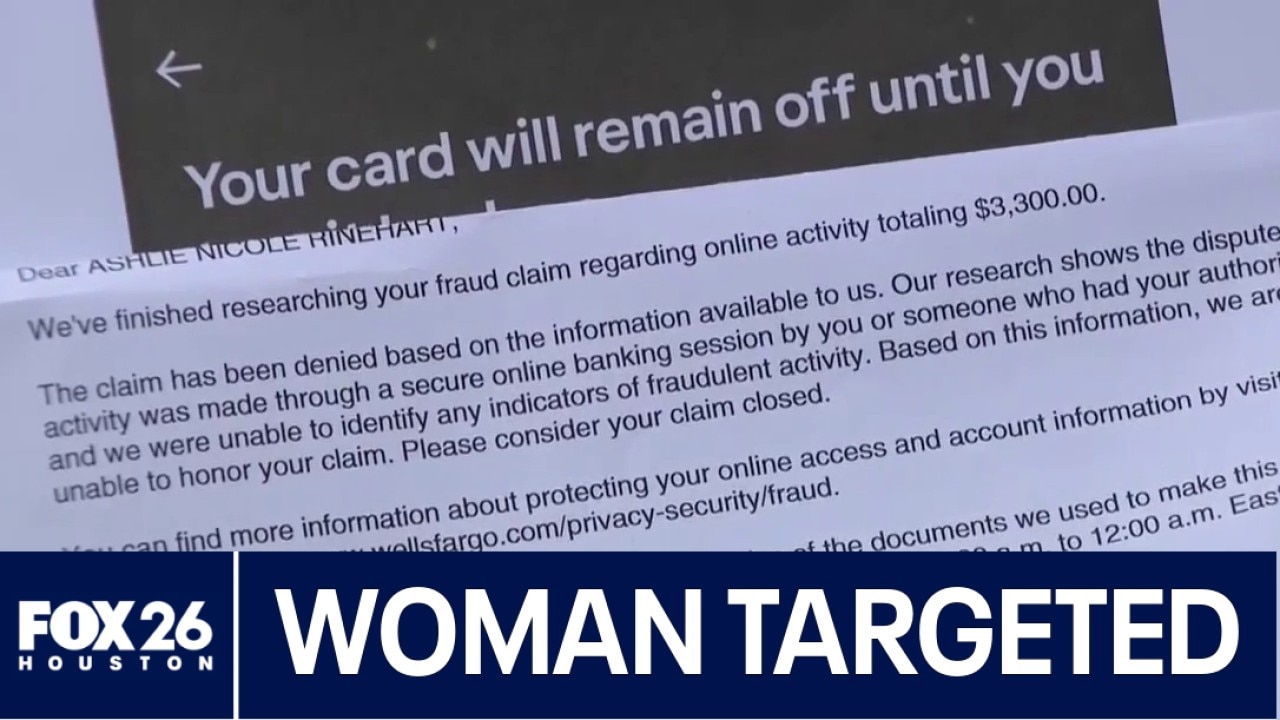
Wells Fargo has denied her claim three times, saying she allowed someone access to her Zelle.
Ashlie wants to warn others not to fall victim like she did. Best rule of thumb: If your bank calls, do not answer it. Go to the nearest branch or look up the number and call back.
What they're saying:
FOX 26 received a statement from Eric Blankenbaker, Vice President of Communications with Zelle, saying:
"What we consistently see is that scams don’t start with money. They start on social media platforms, online marketplaces, and through text messages and spoofed phone calls. Many of these scams are run at scale by organized criminal networks, often overseas. Before money ever comes up, the damage is already happening at the identity level. Once conversations move into private messages, texts, or calls, there’s less visibility and fewer safeguards. It’s harder to verify identities or spot suspicious behavior.
Scammers also create urgency – fake emergencies or emotional crises – so people don’t stop to think or check with someone they trust. Slowing things down, staying on-platform, and questioning sudden pressure, hanging up the phone and calling back the official number can interrupt the scam before it escalates.
That said, the reported rates of scam and fraud related to payments using Zelle are extremely low. Currently, only 0.02% of all Zelle transactions result in a report of fraud or scam. For perspective, you are more likely to get food poisoning (3%), be in a car accident (around 2%) or get injured using the toilet (0.07%) than experience fraud or scam related to Zelle as a payment method today."
The Source: FOX 26's Randy Wallace spoke with Ashlie Rinehart and Eric Blankenbaker, Vice President of Communications with Zelle.