

Houston advocates push for court privacy reforms in 'true crime' era
Houston advocates push to keep murder evidence from the public
A landmark Texas privacy law designed to shield the families of murder victims from public trauma is facing a modern-day crisis in the digital "true crime" era. FOX 26's Mekenna Earnhart explains the legal loophole and how Houston advocates are looking to close that loophole.
HOUSTON - A landmark Texas privacy law designed to shield the families of murder victims from public trauma is facing a modern-day crisis in the digital "true crime" era.
Texas privacy law
The backstory:
13 years ago, Texas passed Senate Bill 1512, a statute aimed at keeping graphic crime scene photographs private. Under that law, regular individuals are prevented from filing open records requests to copy and distribute sensitive images from police departments.
However, local victims' advocates say they have uncovered a significant loophole within the state’s judicial system. Once evidence is introduced in an open courtroom during a murder trial, it legally becomes part of the public record—leaving judges with the sole discretion to release surveillance videos, body-worn camera footage, and crime scene photographs to the public.
The issue resurfaced following the high-profile murder trial of Karmelo Anthony in north Texas. Anthony, 19, was convicted and sentenced to 35 years in prison for the fatal April 2025 stabbing of 17-year-old student-athlete Austin Metcalf during a high school track meet in Frisco.
Following the trial's conclusion, the presiding judge exercised his legal authority to publicly release several pieces of trial evidence, including Kuykendall Stadium surveillance videos and police body camera footage of the arrest. Because cameras had been banned from the courtroom during the trial itself, the release marked the first time the public had access to the footage.
To be clear, legal experts emphasize the judge did not break any laws. Under current Texas statutes, court evidence falls into the public domain once a verdict is reached.
"It's just revictimization"
What they're saying:
Advocates argue that in the modern era of true-crime podcasts, streaming services, and social media platforms, like TikTok, the immediate public release of unedited trial evidence allows real-world tragedies to be repackaged as online entertainment.
Andy Kahan, Director of Victim Services for Crime Stoppers of Houston, originally championed the 2013 privacy legislation. He said the recent release of evidence without notification to the victim’s family proves the law has fallen behind technology.
"What the judge did in that case wasn't illegal, he has discretion to release the photos, but it doesn't make it right, does it?" Kahan said. "From what I understand, they were not even notified that you were releasing grisly, gruesome crime scene pictures of their son... for all the world to see."
Kahan has joined forces with Houston victims' advocate Leticia Ybarra, whose daughter, Jessica, was murdered in August 2020. Together, they plan to approach state lawmakers ahead of the next legislative session to propose stricter statutory language or draft an entirely new bill.
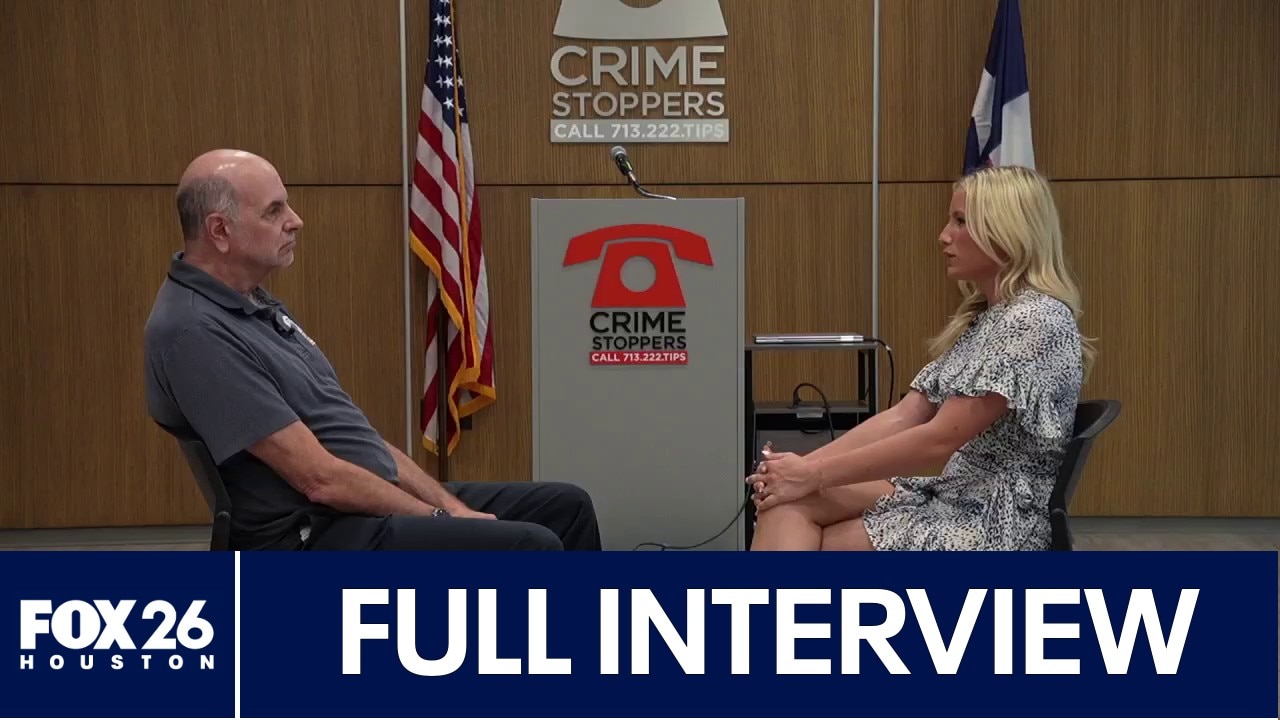
FULL VIDEO: Andy Kahan discusses legislation he proposed banning release of murder victim photos
Who counts in the digital age?? In 2013, Andy Kahan pushed for legislation banning the public release of graphic murder victim photos. With the massive boom in true-crime podcasts, and TikTok sleuths, online content creators are exploiting legal loopholes to get horrifying crime scene photos for clicks. FOX 26's Mekenna Earnhart spoke with Andy Kahan from Houston Crime Stoppers about the issue.
Their objective is an amendment that would strip courts of the unilateral power to release sensitive recordings and imagery, mandating that judges secure explicit consent from a victim's family first.
Ybarra said the explosion of internet sleuth culture means families face a continuous cycle of re-traumatization long after a court case concludes.
"Sentencing happens and you move on... There is no finality to things being released on the internet," Ybarra said. "It will never be over. I could be 80-years-old and come across it again. It's just revictimization."
While the push centers on protecting grieving relatives, changing public access to judicial records faces significant legal hurdles. Critics and First Amendment advocates warn that placing restrictions on trial evidence crosses a controversial line regarding government transparency and the freedom of the press.
Constitutional protections
The other side:
Chris Tritico, FOX 26 Senior Legal Analyst, noted that public access to evidence is often a vital safeguard against official misconduct and wrongful convictions. He added that enforcing a mandatory family permission requirement would fundamentally conflict with constitutional protections.
"I understand what Andy Kahan is saying. A family to be looking online or watching these shows is going to see these horrible graphic images. And it hurts. I get it. I truly get that," Tritico said. "But that is not what the First Amendment is designed to protect. And that's where a piece of legislation that says media outlets can't have this to protect these victims... I think that that's gonna be a tough piece of litigation."
Tritico also highlighted that the rapidly changing media landscape complicates who qualifies for access under traditional laws.
"We don't know what the definition of media is anymore, do we?" Tritico said. "Now media is some main television stations and a whole lot of streaming outlets and these things on the internet... TikTok and all these things that can be and will become media. And the courts are going to have to begin adapting the First Amendment to what media is today."
Due to those deep-rooted constitutional protections, any new legislation attempting to limit public court files is expected to face an immediate uphill battle.
Kahan and Ybarra say they recognize the legal challenges but plan to work with state representatives to draft compromise language before the legislature convenes in Austin.
The Source: Andy Kahan, Director of Victim Services for Crime Stoppers of Houston, Houston victims' advocate Leticia Ybarra, Chris Tritico, FOX 26 senior legal analyst