

Trump threatens retaliation if Iran attacks Qatar again
Strikes continue in Iran after security chief killed
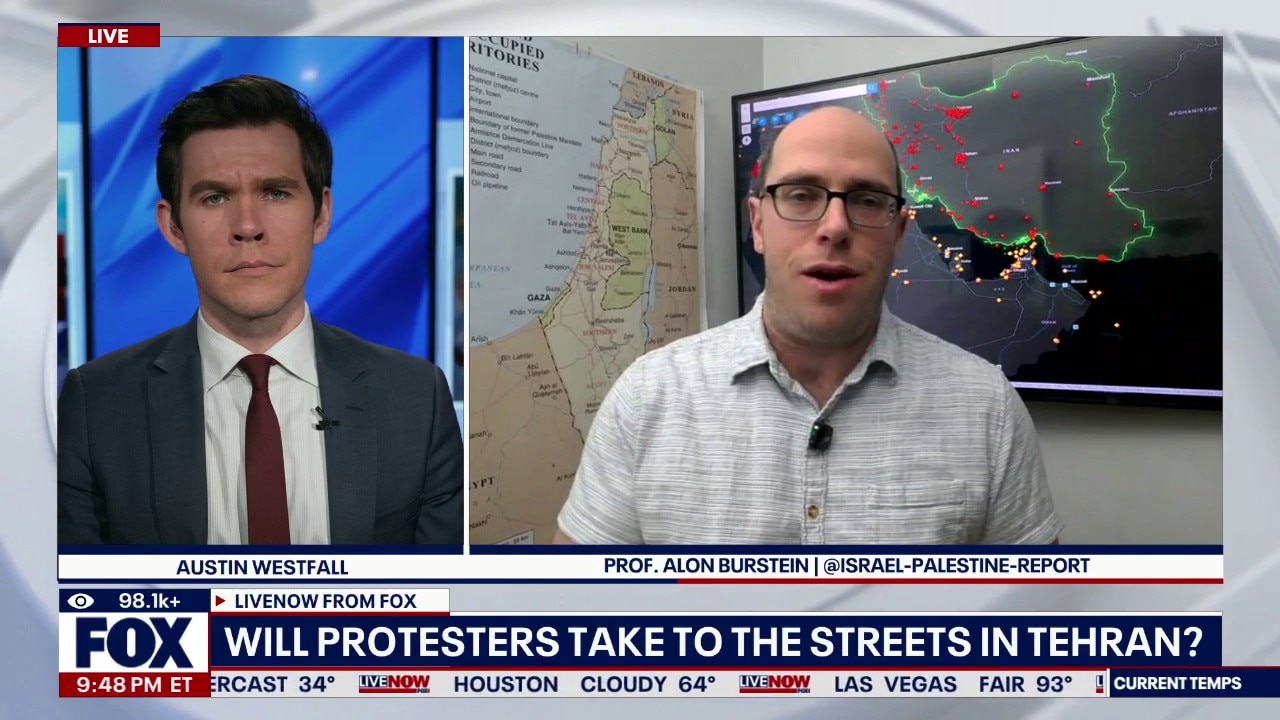
According to reporting from the Associated Press on Wednesday, Israel’s defense minister has announced that Iranian Intelligence Minister Esmail Khati has been killed. LiveNOW's Austin Westfall is reporting on the conflict with Iran, featuring an interview with Prof. Alon Burstein of the Israel-Palestine-Report. The conflict has reportedly resulted in at least 1,300 fatalities in Iran, according to local officials. This also comes as U.S. House Speaker Mike Johnson acknowledged on Wednesday that the situation in the Strait of Hormuz "is dragging it out a little bit."
Israel’s defense minister told the Associated Press on Wednesday that the military killed Iranian Intelligence Minister Esmail Khatib.
The AP reported that the attacks came hours after Iranian state media confirmed Israel’s military killed top Iranian security official Ali Larijani in an overnight strike, as well as Gen. Gholam Reza Soleimani, the head of the Revolutionary Guard’s Basij force, known for its role in suppressing protests.
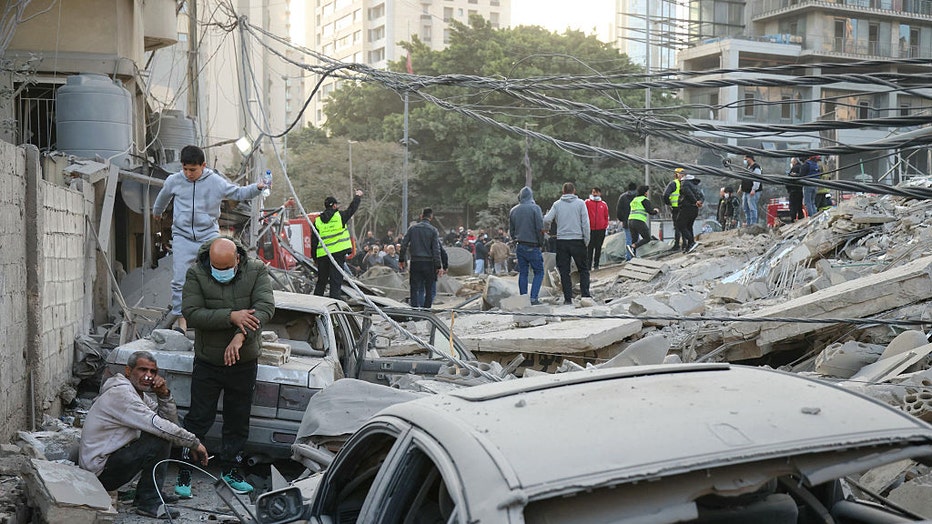
People react at the site of an Israeli airstrike in Beirut's Bashoura neighborhood on March 18, 2026. (Photo by Ibrahim Amro / AFP via Getty Images)
Iran launched strikes against Israel and neighboring Gulf countries on Wednesday, with explosions heard in the United Arab Emirates and Qatar and interceptions reported in Saudi Arabia.
RELATED: Top Iranian officials killed as strikes continue in the Middle East
The U.S.-Israeli war with Iran has killed at least 1,300 people in Iran, more than 900 in Lebanon and 14 in Israel, according to officials in those countries. The U.S. military says 13 U.S. service members have been killed and about 200 wounded.
Here's a look back at what happened on Wednesday.
Trump threatens to "blow up" South Pars gas field
10:25 p.m. ET: Trump pledged Israel would stop striking Iran's South Pars gas field but would "massively blow up" the field if Iran attacked Qatar again.
Trump made the threat on his social media Wednesday night ter Iranian missiles hit Qatar.
Speaker Johnson claims "situation" in Iran is "virtually accomplished now"
6:49 p.m. ET: Speaker Mike Johnson acknowledged on Wednesday that the situation in the Strait of Hormuz "is dragging it out a little bit."
Johnson said that the president was right to ask countries who have interests in the region to help in securing the strait.
"I think it’s pretty absurd that those requests were rebuffed," he told reporters.
"I do think the original mission is virtually accomplished now: We were trying to take out the ballistic missiles and their means of production, and neuter the Navy, and those objectives have been met," he said. "As soon as we bring some calm to the situation, I think it’s all but done."
Trump pays his respects as the remains of 6 US service members return from the Middle East
4:35 p.m. ET: The Associated Press reported that this was the second time since beginning the war with Iran on Feb. 28 that President Donald Trump has attended themilitary ritual known as a dignified transfer, which Trump once described as the "toughest thing" he has had to do as commander in chief.
All six crew members of a KC-135 Air Force refueling aircraft were killed last week in a plane crash over friendly territory in western Iraq while supporting operations against Iran.
Wednesday’s dignified transfer was closed to news media coverage at the request of the families in accordance with military police. Trump spent just under two hours on the ground and didn’t speak to reporters leaving Air Force One or returning to it.
US knew Israel planned to strike an Iranian gas field but didn’t take part, AP source says
3:05 p.m. ET: According to the Associated Press, the United States was informed about Israel’s plans to strike Iran's massive South Pars natural gas field, but did not take part in it, according to a person familiar with the matter.
The person, who was not authorized to comment publicly and spoke on condition of anonymity to the AP, would not say if the U.S. administration agreed with the Israeli decision to attack the gas field — part of the world’s largest such resource and a pillar of Iran’s energy supplies.
Federal Reserve officials expect the Iran war will worsen inflation this year while having little impact on growth
2:15 p.m. ET: The Associated Press reported that despite the projection, Fed policymakers still expect to cut their key rate once in 2026.
For now, officials left short-term interest rates unchanged for the second consecutive meeting at roughly 3.6%. In a statement Wednesday obtained by the AP, the central bank said that the "implications of developments in the Middle East for the U.S. economy are uncertain."
However, by keeping their forecast for a rate cut this year and next, central bank policymakers appear to expect the gas price surge from the Iran war to have a temporary effect on inflation and the economy. Policymakers also predict unemployment remaining unchanged by the end of 2026.
The AP added that officials expect inflation to fall back to 2.2% in 2027 and hit the Fed’s 2% target in 2028.
CIA director doesn’t confirm that Iran could have threatened US with a missile in 6 months
11:45 a.m. ET: The Associated Press reported that CIA Director John Ratcliffe told legislators at a Senate hearing Wednesday that an unencumbered Iran could have developed missiles with a range of 1,864 miles that could strike Europe.
Ratcliffe also said Iran would have developed the ability to threaten the U.S. if it had continued to work on its booster technologies.
According to the AP, the CIA director did not directly answer a question from Republican Sen. Tom Cotton of Arkansas regarding whether Iran could have had a missile to threaten the U.S. "in as few as six months."
Ratcliffe told Cotton he was "right to be concerned." But the CIA director did not provide a time frame for when Iran could have threatened Europe or the U.S. with a missile.
Days after launching the war, Trump administration officials told congressional staff in private briefings that U.S. intelligence did not suggest Iran was preparing to launch a preemptive strike against the U.S.
US national intelligence director avoids saying whether she warned Trump about fallout from attacking Iran
11 a.m. ET: The Associated Press reported that U.S. Director of National Intelligence Tulsi Gabbard dodged when asked by senators during a hearing about whether she had warned President Donald Trump about the possibility of Iran attacking other Gulf nations and threatening ships in the Strait of Hormuz.
"I have not and won’t divulge internal conversations," Gabbard said in response to questions from Democratic Sen. Mark Warner. "I will say that those of us within the intelligence community continue to provide the president with all of the best objective intelligence available to inform his decisions."
According to the AP, Warner was frustrated with Gabbard’s lack of a clear response and pointed to Trump’s remarks that suggest he did not expect Iran to launch an attack on other Gulf nations or close the Strait of Hormuz, which is vital for oil exports from the region.
Top counterterrorism official Kent resigns over Trump’s Iran war
Dig deeper:
Joe Kent, Director of the U.S. National Counterterrorism Center, has resigned from the Trump administration, according to the Associated Press.
Kent said he "cannot in good conscience" back Trump’s war in Iran.
RELATED: Who is Joe Kent? Trump counterterrorism admin, veteran resigns over Iran war
Iran "posed no imminent threat to our nation, and it is clear that we started this war due to pressure from Israel and its powerful American lobby," Kent posted on social media Tuesday.
Kent is a former political candidate with connections to right-wing extremists who was confirmed to his post last July on a 52-44 vote, the AP noted.
Energy supply concerns grow
Big picture view:
Iran’s grip on the Strait of Hormuz, through which a fifth of the world’s oil is transported, is sparking concerns about tightening energy supplies.
A few ships have crossed through the strait, and Iran has said the waterway technically remains open — just not for the United States, Israel and their allies. About 20 vessels have been struck.
With oil prices rising, Trump has demanded that roughly a half-dozen countries send warships to ensure ships can pass through the strait but said he has not gotten any support.
The Source: Information for this article was taken from The Associated Press and previous reporting by FOX Local. This story was reported from San Jose and Washington, D.C.