

Harris County Flood Control Chief faces scrutiny under $800M resiliency deadline
Harris County judge, commissioners at odds over flood control director
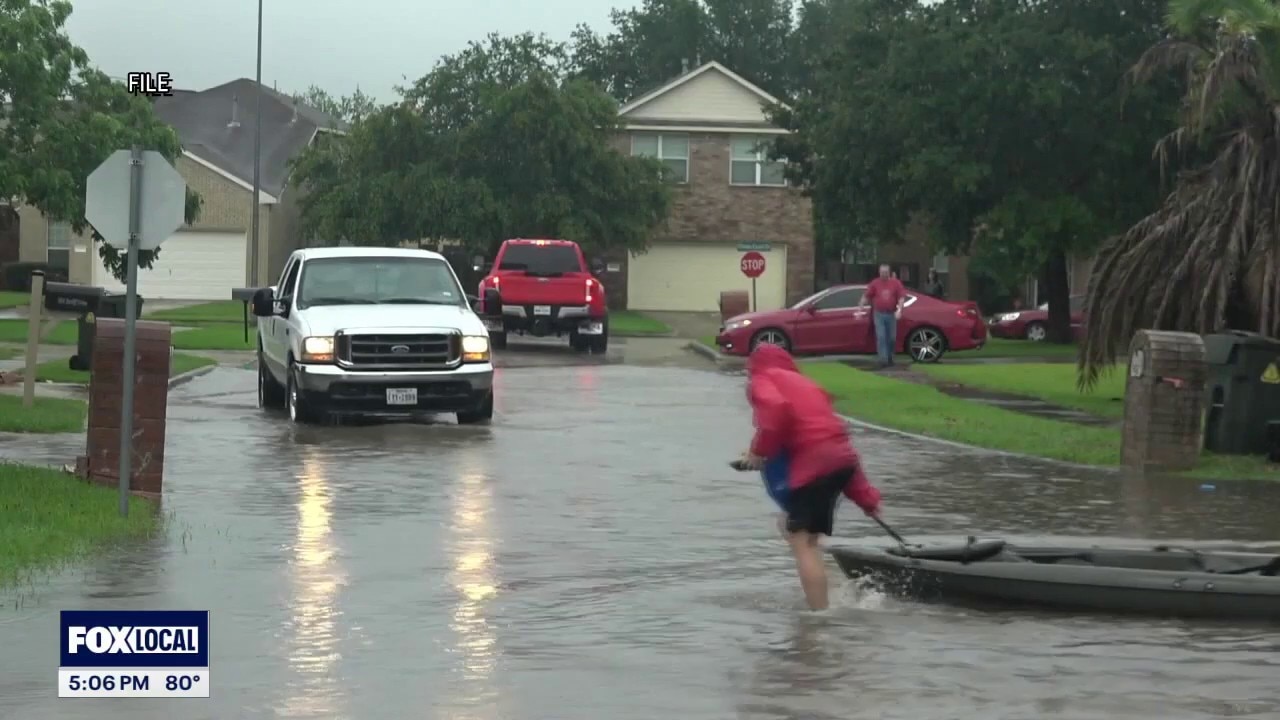
Harris County Judge Lina Hidalgo has been criticizing the leader of the county's Flood Control District. FOX 26's Sherman Desselle explains the critiques, where commissioners stand, and the Flood District's repsonse.
HARRIS COUNTY, Texas - A high-stakes political standoff over the future of the Harris County Flood Control District (HCFCD) has intensified, exposing deep structural divides among county leaders as a ticking clock threatens more than $868 million in federal flood resiliency funding.
What we know:
The controversy, which centers on a push by Harris County Judge Lina Hidalgo to remove HCFCD Executive Director Dr. Tina Petersen, comes amid growing scrutiny over severe project backlogs. According to an internal HCFCD status report dated May 1, the vast majority of 28 critical infrastructure projects remain tied up in preliminary design phases rather than active construction.
Under current federal guidelines, 11 critical Disaster Recovery projects must clear a hard close-out and audit window by February 28, 2027, putting $322 million in federal Community Development Block Grant (CDBG) funds on the line. An additional 17 mitigation projects, valued at over $546 million, face an expiration deadline in March 2028.
Local flood watchdog Bob Rehak, who tracks county watershed engineering metrics via Reduce Flooding, says that local billing and construction expenditures have experienced a consistent downward trajectory since Petersen assumed leadership in 2022. Rehak reported that current projections indicate only five of the 11 near-term disaster projects are on track to beat the federal close-out window, leaving hundreds of millions in federal aid vulnerable to recovery by the state.
"The spending right after Hurricane Harvey peaked within a year or two," Rehak said. "They brought in Tina Petersen, and ever since then, the billing has been going straight downhill consistently... That's an indication of projects that are not getting into construction."
The push for a management shakeup has met stiff resistance from members of the Commissioners Court. Precinct 2 Commissioner Adrian Garcia pushed back, characterizing the 2018 flood bond program as structurally compromised long before Petersen took office. Garcia asserted that the initial bond list lacked comprehensive feasibility studies, right-of-way planning, and realistic cost projections, forcing current management to navigate an inherited "ball of red tape, duct tape, and band-aids."
Garcia also blamed external regulatory frameworks, arguing that the federal funds themselves carry no expiration dates, pointing instead to compressed compliance windows manufactured by the Texas General Land Office (GLO). He also alleged a distinct breakdown in executive communication, stating that Petersen has repeatedly requested updates with Judge Hidalgo, yielding only a single formal meeting.
"You change leadership right now, we're absolutely not going to meet those timelines," Garcia said. "Just because we approve a contract to go to construction doesn't mean you start breaking ground the very next day. The contracts have been approved... and they're beginning to do the work."
However, other members of the court argue that local accountability cannot be bypassed. Precinct 3 Commissioner Tom Ramsey, a licensed professional engineer, disclosed that the court had to take the unusual step of a formal court intervention just to compel the Flood Control District to release clear schedule data—information he noted the state GLO had been requesting for months.
While Ramsey acknowledged the historic, multi-billion-dollar scale of the infrastructure footprint Harris County is attempting to deliver, he emphasized that the district is entering its most volatile operational phase.
"To say everything is back on schedule... the design effort is hard, but the hard part is building it," Ramsey said. "So now we're into construction and we have got to be really, really good on the construction side."
What they're saying:
In an official statement responding to the criticisms, the Harris County Flood Control District pushed back against the political narrative, stating it is bidding more construction work this year than at any point in its 90-year history. The district reiterated that the 2018 bond program was never an executable, shovel-ready list and required exhaustive environmental and partnership agreements before ground could responsibly be moved.
Full statement from HCFCD Chief External Affairs Officer, Emily Woodell:
"This year, the Flood Control District is bidding more construction work than ever before, which will result in tangible benefits for residents. This milestone is the result of our teams’ hard work to turn concepts and ideas into construction-ready projects with full funding. The vast majority of the 2018 Bond Program was not a shovel-ready construction list. Many projects began as ideas that required study, engineering, environmental review, right-of-way acquisition, partnership agreements, and funding coordination before they could responsibly move forward.
Early program spending reflected the work that was ready at the time: existing projects, major property acquisition, and storm recovery. That was the low-hanging fruit for spending. Today, the program is reaching its next peak, the phase where the majority of long-term flood risk reduction benefits move into construction and delivery.
Under current leadership, the Flood Control District has transformed processes and models to meet the scale of the moment. The agency is advancing a $5.3 billion bond program, meeting an exponential increase in maintenance expectations, doubling local investment, leading countywide planning, cutting through bureaucracy, accelerating project delivery, and prioritizing flood protection for communities that need it most.
We have nearly 90 years of experience delivering complex projects, and we know federal mitigation programs always come with substantial requirements, regulations, and schedule constraints. The risks around the current CDBG-funded programs have been acknowledged publicly from the outset and have been repeatedly documented through letters, trips, court actions, and partner discussions.
The GLO has been a strong partner, and the Flood Control District’s focus remains where it should be: delivering these projects. Continued support is critical as the Flood Control District engages with GLO on deadline conversations, tackles the challenges that come with complex infrastructure programs, and keeps this historic body of work moving for Harris County residents."
What's next:
The political battle is expected to continue next month. Ramsey confirmed that County Administrator Diana Carter is currently looking into the metrics, setting up a critical item on the agenda when the Commissioners Court reconvenes in June.
The Source: Local flood watchdog Bob Rehak, Harris County Precinct 2 Commissioner Adrian Garcia, Harris County Precinct 3 Commissioner Tom Ramsey