

How to fry a turkey for Thanksgiving: Safety tips to avoid dinner disaster
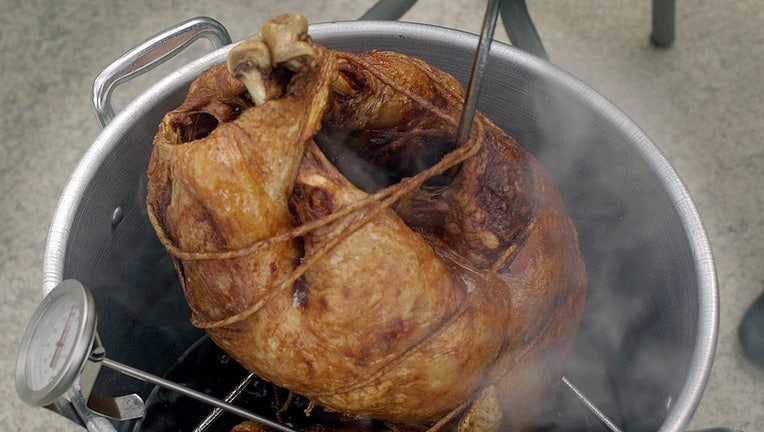
As Thanksgiving Day approaches, millions of Americans are preparing to cook their turkey.
Despite warnings every year, someone tries to deep-fry their turkey's, and it just ends up in disaster. Here's safety advice to avoid Thanksgiving turning into an emergency.
Deep-frying a turkey dangers
Big picture view:
Deep-frying a turkey on Thanksgiving Day can pose serious hazards.
According to the National Fire Protection Association (NFPA), there are three times the daily average for home cooking fires on Thanksgiving Day. The NFPA even warns against frying your own turkey at home altogether and just purchasing one from the store.
NFPA also said that deep fryers, on average, cause 60 injuries, 5 deaths and over $15 million in property damage.
For those home cooks who just have to do it themselves, here are a few tips to guide you from State Farm and other experts – including preparing a safe space, watching the oil, getting the temperature right, and cleaning up cautiously.
RELATED: Thanksgiving travel: Here are the holiday foods you can bring through TSA
Where to fry a turkey
Find a safe area away from your home to put the fryer. Keep the fryer away from garages, decks and fences, and a safe distance away from trees.
There should be at least two feet between the burner and tank, according to State Farm. Everyone, including the cook, should keep a safe distance away from the fryer, and it's suggested to keep a fire extinguisher nearby.
Be cautious of the weather and avoid using the fryer in the rain or snow.
Everyone, including the cook, should keep a safe distance away from the fryer and it's suggested to keep a fire extinguisher nearby.
You can't safely fry a turkey that isn't properly thawed, either. Frozen or wet turkeys can cause hot oil to splatter, potentially causing burns. So make sure the turkey is thawed completely and dry before frying. Also, skip stuffing the turkey before frying.
*The video below was originally posted in November 2022.*
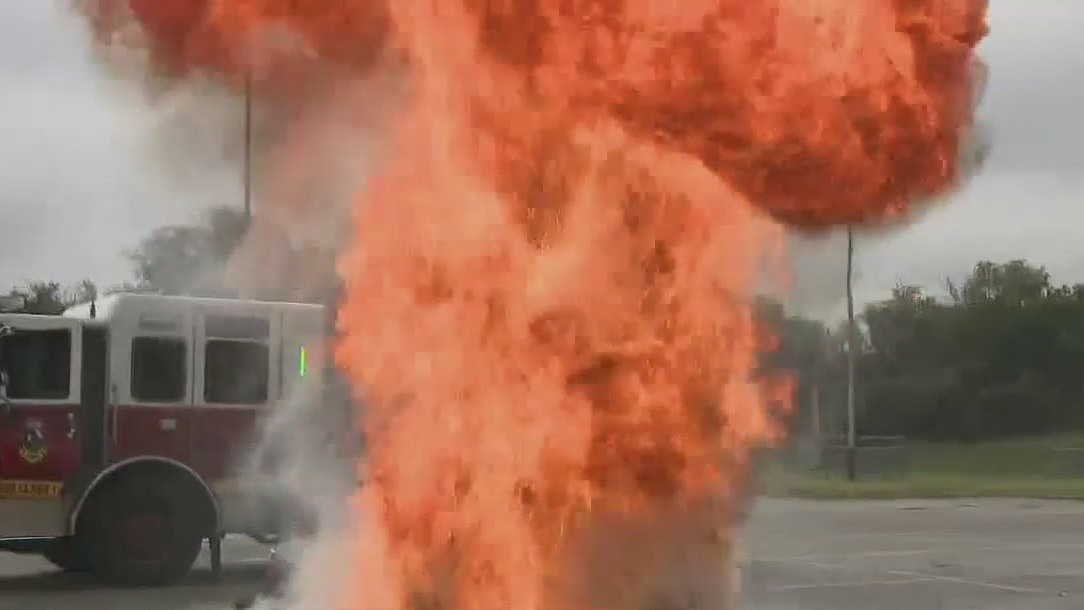
Please do not do this when frying your turkey
Despite warnings every year, someone tries to deep fry their turkey's and it just ends up in disaster. Firefighters share tips on how you can stay safe in the kitchen this Thanksgiving.
Beware of oil and temperature
Choose the proper size turkey. Typically, between 8 to 10 pounds works well.
Once the oil gets hot, it’s easy for things to get messy. Don’t use too much oil, because overfilling can lead to oil spilling onto the fire below and igniting a fireball.
When cooking the turkey, keep your oil temperature at 350 degrees and cook your turkey for 3 1/2 minutes per pound. That's about 35 minutes for a 10-pound turkey.
Wear safety glasses, oven mitts and an apron to handle the fryer well before the oil starts to bubble. Make sure your fryer is on a flat, level space to carefully gauge the amount of oil needed.
Experts also suggest keeping protective equipment within reach, such as an "ABC" or grease-rated fire extinguisher.
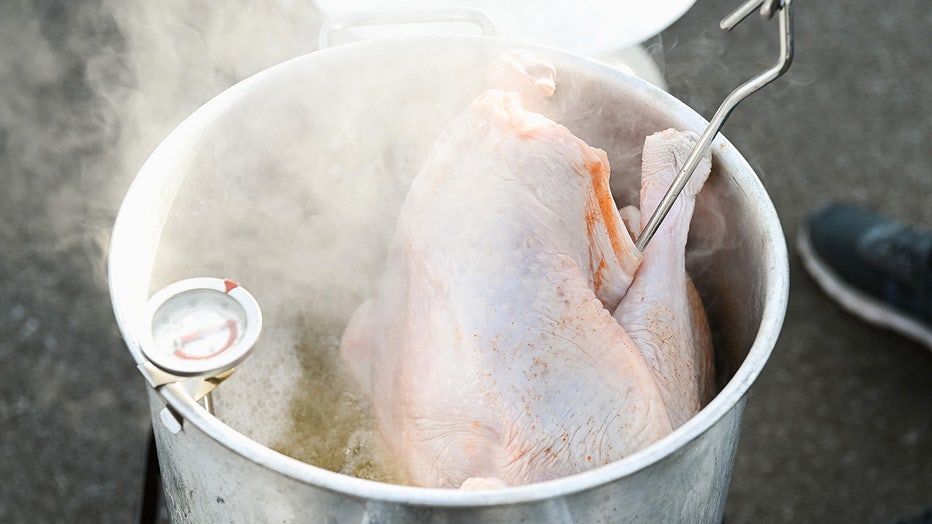
Make sure your fryer is on a flat, level space to carefully gauge the amount of oil needed. (Photo by Jason Kempin/Getty Images)
Keep an eye on the turkey
Use temperature control to make sure the fryer does not catch fire. If possible, purchase a fryer with temperature controls already built in and watch the oil temperature carefully.
Cooking oil that is heated beyond its smoke point can catch fire. If you notice the oil is smoking, turn the fryer off.
When raising or lowering the turkey from/into the oil, go slowly to minimize spills, and give your full attention to the process. Avoid alcohol, too, and it goes without saying that you should never leave the bird unattended.
Never use a water or garden hose on a fire related to turkey fryers. Remember: a turkey fryer fire is a grease fire and water can cause grease and oil to spread.
Clean up after frying
Once you’ve fried up that bird, remember to remove it from the fryer slowly, turn off the heat and clean up your frying space just as meticulously as you set it up.
When it comes time to gather around the table, enjoy every compliment your savory dish receives.
The Source: This story was reported from Los Angeles. State Farm, previous FOX Local reporting contributed.