

Judge rules mistrial for suspect in deadly 2022 Houston police chase; family reacts

Mistrial declared following deadly chase
FOX 26 Reporter Sherman Desselle explains why the mistrial was declared on Wednesday afternoon.
Houston - The criminal trial of Yasmir Reyes, who is charged with felony murder and aggravated assault following a deadly 2022 police chase, was ruled a mistrial after a motion by the defense was granted by the judge. Attorney Jimmy Ortiz argued that his client's leg shackles were visible to the jurors at the time of the trial. Earlier Wednesday, the trial was moving forward with key testimony from a Houston Police Department (HPD) crash reconstruction expert. Detective Jason Baker detailed the extreme speed and mechanics of the collision, telling the jury the defendant's car T-boned the victim's vehicle after running a red light.
The 2022 crash
The backstory:
The defendant, Reyes, is accused of causing the death of 27-year-old rideshare driver, Chaz Joubert, and severely injuring his 16-year-old passenger after his black Ford Mustang, allegedly fleeing police, crashed into Joubert's white Chevrolet Malibu.
Judge Denise Collins is presiding over the trial.
The family of Chaz Joubert, including his mother, were present in the courtroom throughout the emotionally charged testimony.
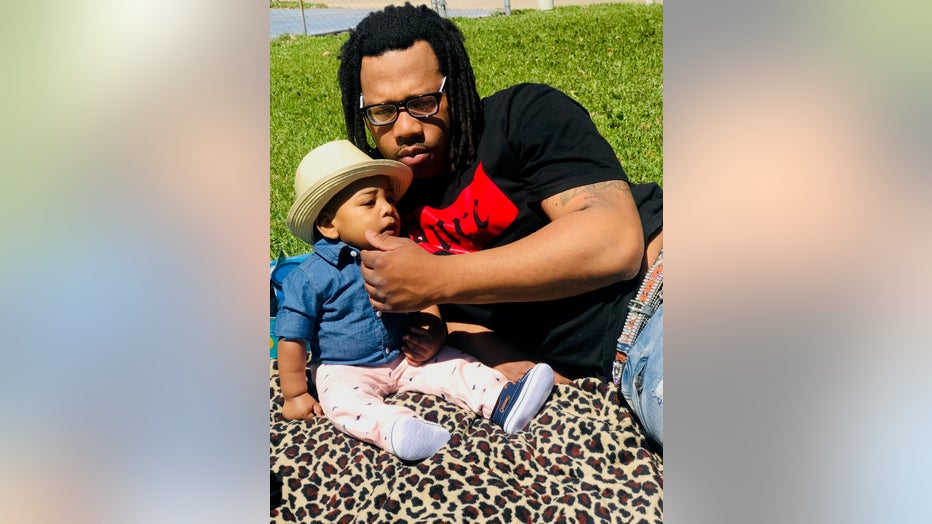
Photo of Chaz Joubert, the 27-year-old rideshare driver who was killed in a crash that started as a police chase involving Yasmir Reyes in 2022.
PREVIOUS COVERAGE: Mother seeks justice for son killed in Houston police chase, demands change
Notes from Wednesday's proceedings
What they're saying:
The trial in Judge Denise Collins’ court focused Wednesday on the scientific and visual evidence detailing the high-speed wreck.
Detective Jason Baker, a certified crash reconstructionist, told the jury that based on an analysis of pre-crash vehicle data, the collision was a high-speed T-bone.
The prosecution presented technical information, including data retrieved from the vehicle's onboard computers, to show that Reyes was traveling at extreme speeds moments before the impact. This evidence was combined with a crash diagram and officer body camera footage, both confirming that Reyes ran a red light before entering the intersection and striking Joubert’s Malibu, according to Baker.
Prosecutors added surveillance video from a nearby business, which captured the black Mustang speeding and exhibiting sparks flying from the vehicle. Baker testified that this indicated a mechanical failure, such as a blown tire, occurring while Reyes was allegedly attempting to flee.
Cross-examination
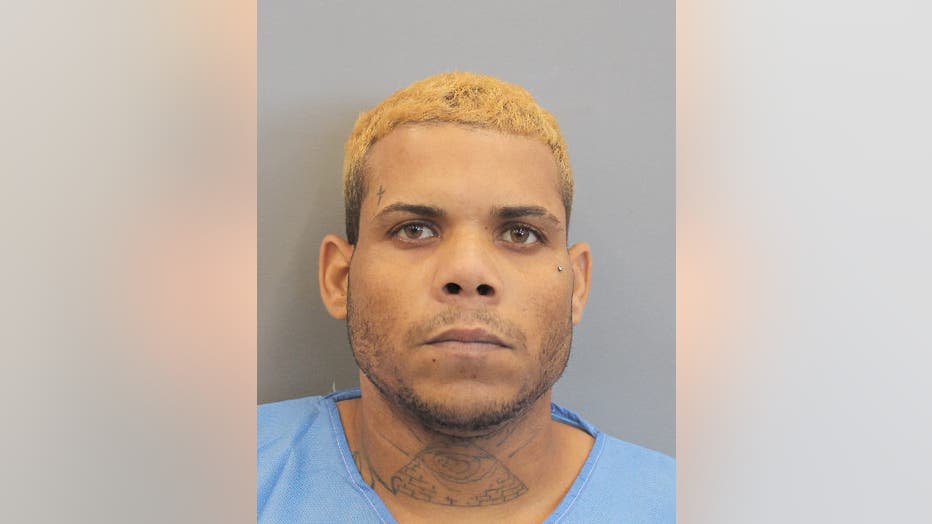
Booking photo of Yasmir Reyes, the man facing a murder charge for the 2022 death of Chaz Joubert.
The other side:
Defense Attorney Jimmy Ortiz opened his cross-examination of Detective Baker by suggesting a factor beyond speed and negligence was at play: potential brake failure in Yasmir Reyes's 2012 black Mustang.
Ortiz asked the HPD expert if any patrol officers on the scene of the June 2022 crash indicated that Reyes had reported issues with his brakes prior to the collision. Baker told the court he was never informed of such a claim by responding officers and had only heard of the potential brake failure within the last week.
Ortiz then attempted to discredit the completeness of the investigation, asking Baker if he had requested a specialized inspection by a "parts specialist" if he had been informed of a brake issue earlier. Baker confirmed that he would have altered his investigation to account for mechanical failure, potentially implying a flaw in the initial HPD investigation.
The defense also noted that the vehicle data from the Mustang—the same data used by the prosecution to establish extreme speed—was not downloaded until November 2022, months after the crash.
Medical examiner testimony
Dr. Pramod Gumpeni, the Deputy Chief Medical Examiner for Harris County, testified regarding the injuries suffered by Chaz Joubert. He confirmed that Joubert died from blunt-force trauma sustained in the crash. The forensic examination revealed devastating injuries, including multiple skull fractures, hemorrhages, multiple torso abrasions, and a laceration of the aorta. Dr. Gumpeni affirmed that all injuries were consistent with the extreme impact described by the crash reconstruction unit.
Dr. Gumpeni also confirmed that toxicology tests were completed and showed no signs of alcohol or drug use in Joubert at the time of his death, reinforcing that the victim was unimpaired.
Following the presentation of the forensic evidence, which included photographs used during the medical examination, Defense Attorney Jimmy Ortiz elected not to cross-examine Dr. Gumpeni.
With the conclusion of the Medical Examiner's testimony, the State and defense announced it had no further witnesses and formally rested its case at 12:20pm Wednesday. Reyes has also formally chosen not to testify in his own trial.
Motion to mistrial granted
Around 2:20 p.m., deliberations were dramatically halted in the afternoon after Defense Attorney Jimmy Ortiz notified the court that the defendant's leg shackles were visible to jurors from the jury box. The visibility of restraints on a defendant is generally considered prejudicial, violating the presumption of innocence.
Judge Denise Collins brought each juror back individually to the courtroom to ask if the visible restraints would impact their decision, with all jurors responding no.
Despite the questioning, Ortiz made a formal motion for a mistrial shortly thereafter. Ortiz stated the motion was based on a bailiff's comment indicating that at least one juror had noticed the shackles and mentioned it to the officer.
The exchange between Judge Collins and Ortiz grew tense, with the judge questioning why the defense allowed the court to proceed with individual juror questioning if a motion for a mistrial was the intended course of action. Prosecutors officially opposed the motion. Collins officially granted the motion on Wednesday evening.
"It's bull****. We waited three years to go to court only to get a mistrial because somebody saw some damn shackles," said April Joubert, Chaz's mother. "He's (Reyes) been in jail. We see all the time people in shackles because they're going to court. Chaz lose his life. We lose a loved one. I lose my child. And there's nothing we can do about it."
Joubert says she will continue to keep fighting for justice for her son. The prosecution will have to file an appeal, set a new court date and pick a new jury. The defense declined to comment on Wednesday evening about the decision.
The Source: FOX 26's Sherman Desselle is attending the trial and gathering information on this case.