

Apple outage, banking disruptions raise questions about technology reliability, cybersecurity
Major Tech Service Outages: What You Need to Know
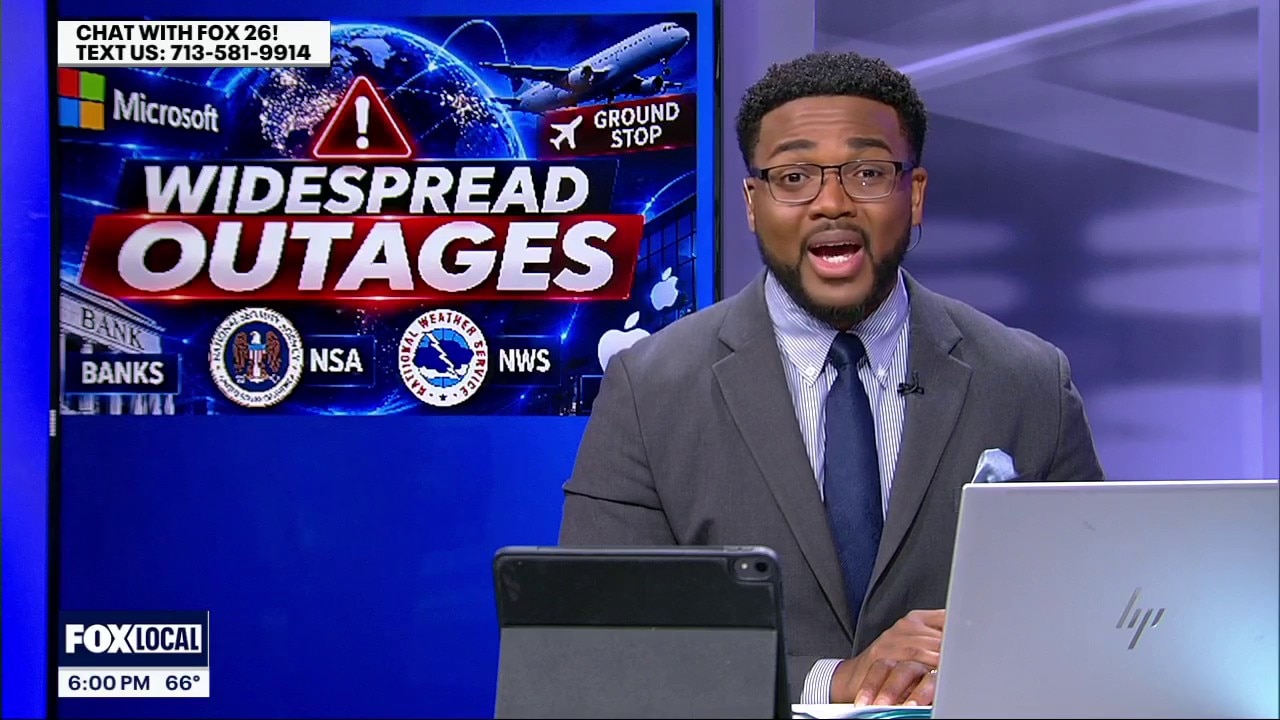
Numerous technology and banking outages in the past week are causing concerns. FOX 26's Leslie DelasBour spoke with a Virginia Tech Professor of Computer Science about what's going on.
HOUSTON - A series of technology outages affecting major banks, airlines and Apple services over the past several days is raising questions about the reliability of the systems millions of Americans depend on every day.
A string of technology disruptions
Matrix style graphics are seen on an Apple iPhone in this photo illustration on January 22, 2019. (Photo by Jaap Arriens/NurPhoto via Getty Images)
What we know:
Over the past several days, Americans have experienced a series of technological problems affecting everything from banking and air travel to popular smartphone services.
On Thursday, users reported disruptions involving Microsoft services.
By Friday, problems involving Federal Aviation Administration communications systems had disrupted flights, adding to concerns about the reliability of technology used in critical operations.
Then on Monday, customers of major financial institutions, including Chase and Wells Fargo, reported problems accessing their accounts and completing transactions.
Some customers said they experienced delays, while others reported being unable to withdraw money or complete certain banking activities.
Bank outage: Chase says transactions 'processing normally' after nationwide outage
Customers reported Monday that multiple major banking websites, including Bank of America, Wells Fargo and Chase, were down. Here's what to know.
Dig deeper:
United Airlines also experienced a separate system disruption.
On Tuesday, thousands of Apple users reported problems accessing services including Apple Pay, iCloud, Apple Music and the App Store.
Some users reported being unexpectedly logged out of their accounts and receiving error messages when attempting to sign back in.
Apple acknowledged disruptions affecting several services, with many later restored.
Separate cyberattack raises security concerns
Meanwhile, a separate cybersecurity incident involving major websites has added to growing concerns about the technology people use every day.
The attack involved malicious computer code inserted into Optimizely, a platform companies use to manage and improve their websites.
Researchers reported that websites associated with 178 organizations were affected, including those connected to CNN, Zoom, Salesforce, IKEA and HSBC.
The malicious code was reportedly designed to steal sensitive information, including credit card details and cryptocurrency, while also attempting to exploit security vulnerabilities in some iPhones.
However, visiting one of the affected websites does not necessarily mean a person's information was stolen or their device was compromised.
Optimizely says it has addressed the vulnerability and removed the malicious code.
There is currently no confirmed connection between the cyberattack and the other technology disruptions reported in recent days.
Expert says there's no reason to panic
What they're saying:
FOX 26 spoke with Dr. Ali Butt, a professor of computer science at Virginia Tech, about the recent string of disruptions and whether artificial intelligence could be playing a role.
Butt says people should not panic or automatically assume the incidents are connected.
While artificial intelligence cannot be completely ruled out as a factor in technology problems, Butt explained that much of the infrastructure supporting today's critical services was developed long before AI became widely used.
He believes the recent disruptions may involve more localized technical problems rather than a single widespread issue.
Butt also emphasized that modern technology systems are incredibly complex, meaning even relatively small problems can sometimes lead to significant disruptions.
As newer generations of software are introduced into essential services, he believes greater oversight is necessary to ensure those systems are thoroughly examined and tested.
Calls for greater transparency and oversight
According to Butt, one of the biggest concerns moving forward is how newer technologies are being integrated into systems that millions of people rely on.
From financial institutions and airlines to communication platforms and everyday smartphone applications, disruptions can quickly affect people's ability to work, travel and access their money.
Butt says policymakers and technology companies should provide greater transparency about how these systems operate, what causes disruptions and what steps are being taken to prevent similar problems.
He also believes newer technologies should be carefully evaluated as they are introduced into critical infrastructure.
While the recent incidents have raised questions about the reliability of digital services, Butt says the public should avoid jumping to conclusions about their causes.
For consumers, cybersecurity experts generally recommend keeping devices updated, using strong passwords, enabling multifactor authentication and monitoring financial accounts for suspicious activity.
What's next:
Although several major technology disruptions have occurred within days of one another, there is no confirmed evidence that they are part of a coordinated incident. Experts say the focus should be on understanding the causes, strengthening oversight and making sure critical systems remain reliable as technology continues to evolve.
The Source: Information in this article was provided by FOX 26's Leslie DelasBour.