

How the Dubiski family turned Astroworld tragedy into global safety reform
HOUSTON - Five years after the tragic crowd crush at the 2021 Astroworld Festival claimed the lives of 10 concertgoers, the family of 23-year-old Madison Dubiski is transforming their grief into a worldwide movement for live event safety.
What we know:
On Tuesday, the City of Houston formally recognized that mission. Mayor John Whitmire and Houston City Council members issued a proclamation officially designating every November as Crowd Safety Awareness Month across the city.
For Madison’s parents, Brian and Michelle Dubiski, and her brother, Ty Dubiski, the honor represents both a tribute to Madison and the nine other victims who never returned home, as well as a testament to the profound work of their nonprofit, the Pink Bows Foundation.
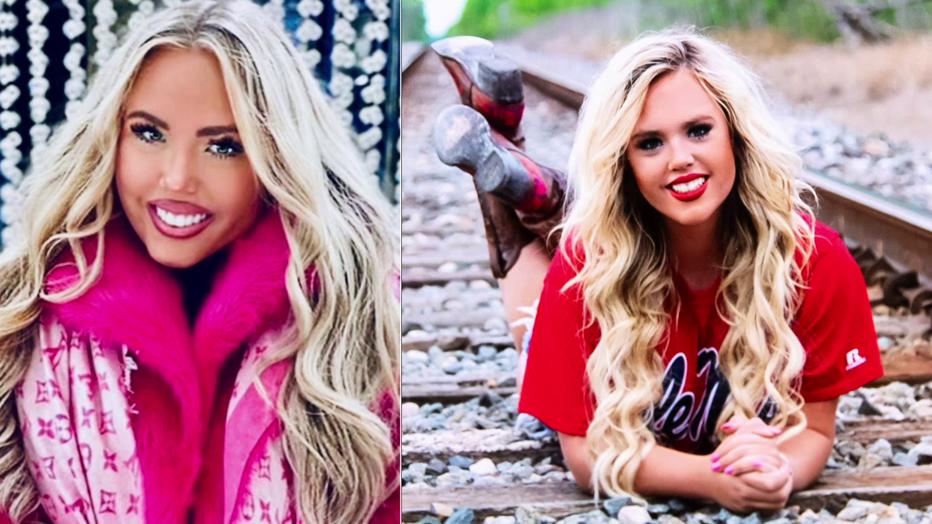
Madison Dubiski
"We knew we had to honor Madison. We couldn't let her have lost her life with nine others without doing something," Brian Dubiski said. "If the roles were reversed, Madison would literally be in the middle of that street yelling and kicking until someone listened to her to challenge what had happened to make live events safer."
The backstory:
A vibrant life cut short
Those who knew Madison describe her as a magnetic force of nature who lit up every room she entered. Before graduating high school, she had already logged more than 500 hours volunteering across 25 different charities.
"Madison was electric," her mother, Michelle Dubiski, remembered. "She had a servant heart and was involved in everything. After she passed, the amount of phone calls and messages we received was unreal — stories of things that she did to make a difference in people's lives that she never came home and told any of us about. She did those purely out of love."
Her younger brother, Ty, was standing by her side when the disaster unfolded at NRG Park on Nov. 5, 2021. The two had arrived around 6 p.m. and waited near the stage for headliner Travis Scott. As the crowd swelled, the environment grew dense, volatile and suffocating.
When the performance began and stage pyrotechnics ignited, the crowd surged forward violently.
"Everyone just tumbled forward and fell," Ty Dubiski said. "I remember I was sitting there trying to pick Madison up, and then the people in front of us pushed back, and then we got pushed forward again and I lost her."
Separated in the chaos and forced into survival mode, Ty managed to escape the crush, believing his sister would do the same. But after frantically searching medical tents across the festival grounds, the family received the call to rush to the hospital, where they learned Madison had not survived.
"At the time, we didn't know what a crowd crush was. We didn't know anything about crowd safety," Ty said. "I kissed her forehead, and her body was just completely cold. It's a hard thing to even think of or talk about."
Big picture view:
Turning grief into global reform
The day after the tragedy, Madison's cousins placed a framed photograph of her at a makeshift memorial outside NRG Park, adorned with a simple pink ribbon and the hashtag #PinkBowsForMadison. Within days, the pink bows spread from Houston across Texas, throughout the country, and around the world.
When the family later entered Madison’s apartment, they found a handwritten note resting on the kitchen counter in permanent marker: "For those who do well, must also do good. ALWAYS GIVE BACK."
Taking that note as a directive, the family launched the Pink Bows Foundation. Rather than assigning blame, they took a collaborative approach, partnering with two of the world's foremost crowd safety specialists to build standardized training and operational protocols for venues, promoters and security personnel.
The foundation’s safety curriculum has now reached stadiums, arenas and event personnel globally — from the United States and the United Kingdom to Europe, Australia and Saudi Arabia. Most recently, when Wembley Stadium in London hosted its first-ever American college football game, the foundation trained both stadium operations staff and the Metropolitan Police, serving as the game's headline nonprofit partner.
What you can do:
Safe spaces and ongoing support
Beyond behind-the-scenes event protocols, the foundation is actively protecting concert attendees on the ground through its Pink Bows Safe Space Tents.
The large, air-conditioned tents offer a quiet sanctuary equipped with comfortable seating, cold water, sensory items and trained volunteers for attendees experiencing sensory overload, panic attacks or emotional distress — issues that often overwhelm frontline medical tents. To date, the program has supported more than 400,000 festivalgoers at major gatherings across the country, including the Arizona State Fair.
While the foundation continues to make live events safer, the Dubiski family emphasizes that the void left by Madison remains as deep as ever.
"Last week was the five-year mark of losing Madison. It does not get easier," Brian Dubiski said. "You never heal; you just manage the situation. But we know for a fact we're making a difference at any live event that anyone's attending. We have saved lives, and that's part of our healing process."
Michelle Dubiski echoed that the goal has never been to eliminate live entertainment, but to ensure that fans can celebrate without fear.
"We definitely would like for everybody who's an attendee to come home safely to their loved ones," she said. "That's what we try for every day. Madison would be so proud."
To learn more about crowd safety initiatives, volunteer opportunities, or to support the mission, visit pinkbowsfoundation.org or follow @PinkBowsFoundation on social media.
The Source: Information for this story comes from Mayor John Whitmire, Brian Dubiski (father), Michelle Dubiski (mother), Ty Dubiski (brother)