

Houston doctor pioneers ultrasound heat map to treat male infertility
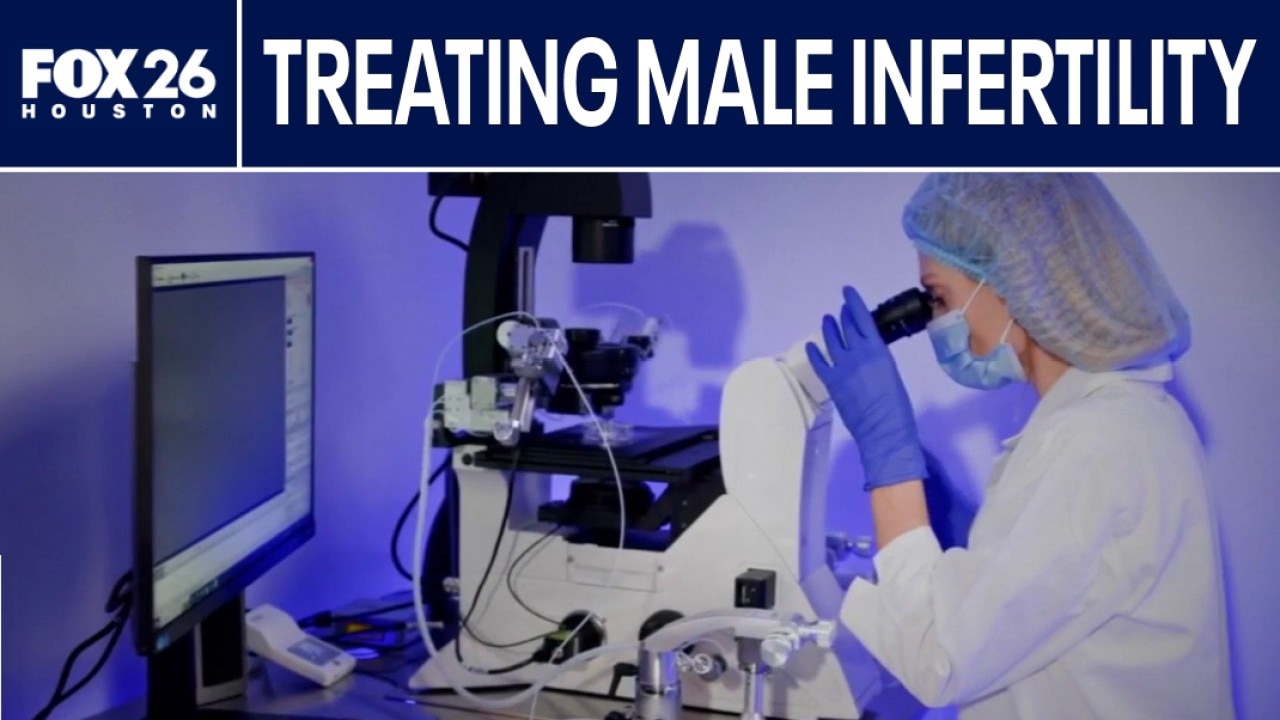
Revolutionary Ultrasound Technology for Male Fertility
Discover groundbreaking ultrasound technology transforming male fertility treatment! Dr. Taylor Kohn shares insights on the less invasive method, enhancing sperm retrieval precision. FOX 26's Anchor/Medical Reporter Melissa Wilson has more.
HOUSTON - A local physician is transforming male infertility care by using non-invasive ultrasound imaging to find viable sperm with greater precision.
What we know:
Dr. Taylor Kohn, a urologist with Baylor College of Medicine and CommonSpirit St. Luke's Hospital in Sugar Land, helped pioneer the breakthrough technique. Instead of surgeons performing exploratory incisions blindly, the new method uses a two-minute scrotal ultrasound and computer analysis to create a detailed map highlighting viable sperm pockets, which are then retrieved for use in in-vitro fertilization.
The backstory:
Men who produce no sperm in their ejaculate often have to undergo invasive surgical procedures where doctors cut into the testicle to search for individual sperm cells. Before this technique, surgeons had no way of knowing where sperm might be located, or if any was present at all, prior to entering the operating room. That uncertainty often led to extensive tissue dissection, prolonged operations, and long-term testicular damage.
What they're saying:
"For some men who do not have any sperm, what we have to do is this very invasive procedure where we actually cut into the testicle and look for individual sperm, but the problem is we do not know prior to going to the surgery where that sperm is going to be or even if there is sperm going to be there. We just do a very quick ultrasound of the scrotum, it takes about two minutes, and then when we do the analysis it takes about another couple of hours to do and then we are able to give a report. We regenerate kind of this heat map, and basically the brighter areas are more likely where sperm is going to be, while the darker areas are where it is less likely to be, which gives us the ability surgically when we are going in to know where we are going to be looking. It has been very helpful because oftentimes we are finding sperm quicker and more efficiently, and there is less damage to the testicle, which is important because a lot of times after this surgery men may not be able to make their testosterone and have to go on therapy long term," says Dr. Kohn.
By the numbers:
The procedure has been evaluated in more than 120 patients with a reported 93% accuracy rate in predicting where sperm is present. In addition, the ultrasound scan itself takes just two minutes, followed by an image analysis that finishes in about two hours.
Why you should care:
Infertility affects millions of couples, yet public discussions frequently overlook male reproductive health. When men undergo traditional testicular sperm extraction, the tissue trauma can permanently halt natural testosterone production, forcing patients onto hormone replacement therapy for the rest of their lives. Targeted ultrasound mapping preserves healthy tissue while improving the odds that a couple can conceive through IVF.
What's next:
The mapping protocol is currently available to patients participating in an ongoing clinical trial, where it is offered free of charge. Researchers are working through regulatory approvals to bring the technology to market and expand access to hospitals nationwide, a process expected to take three to four years.
What you can do:
Men facing fertility challenges should seek evaluation early, as specialists emphasize that male infertility is common and treatable. Couples interested in being screened for the clinical trial can schedule an appointment by calling the Baylor Medicine Urology Clinic at 713-798-4001.
Dig deeper:
Learn more about clinical trials, physician details, and appointment scheduling through the Baylor College of Medicine Urology Department at bcm.edu/urology.
The Source: FOX 26's Anchor/Medical Reporter Melissa Wilson interviewed Dr. Taylor Kohn to gather information for this story.