

How to freeze your credit for free amid tech outages and cyberattacks
How to freeze your credit for free amid tech outages and cyberattacks
It’s been a week of major tech outages affecting everything from airlines and emails to banking systems. Many consumers are now looking for ways to protect their personal and financial information.
HOUSTON - It’s been a week of major tech outages affecting everything from airlines and emails to banking systems.
Most recently, on Thursday morning, J.P. Morgan posted on X saying that third parties who provide services to the company were the target of a cyberattack.
Many consumers are now looking for ways to protect their personal and financial information.
Federal law guarantees consumers the right to lock down their credit files for free.
How to freeze your credit
Here is a step-by-step guide on how to freeze your credit, what it protects, and how to avoid paying unnecessary monthly fees.
Step 1: Contact credit bureaus:
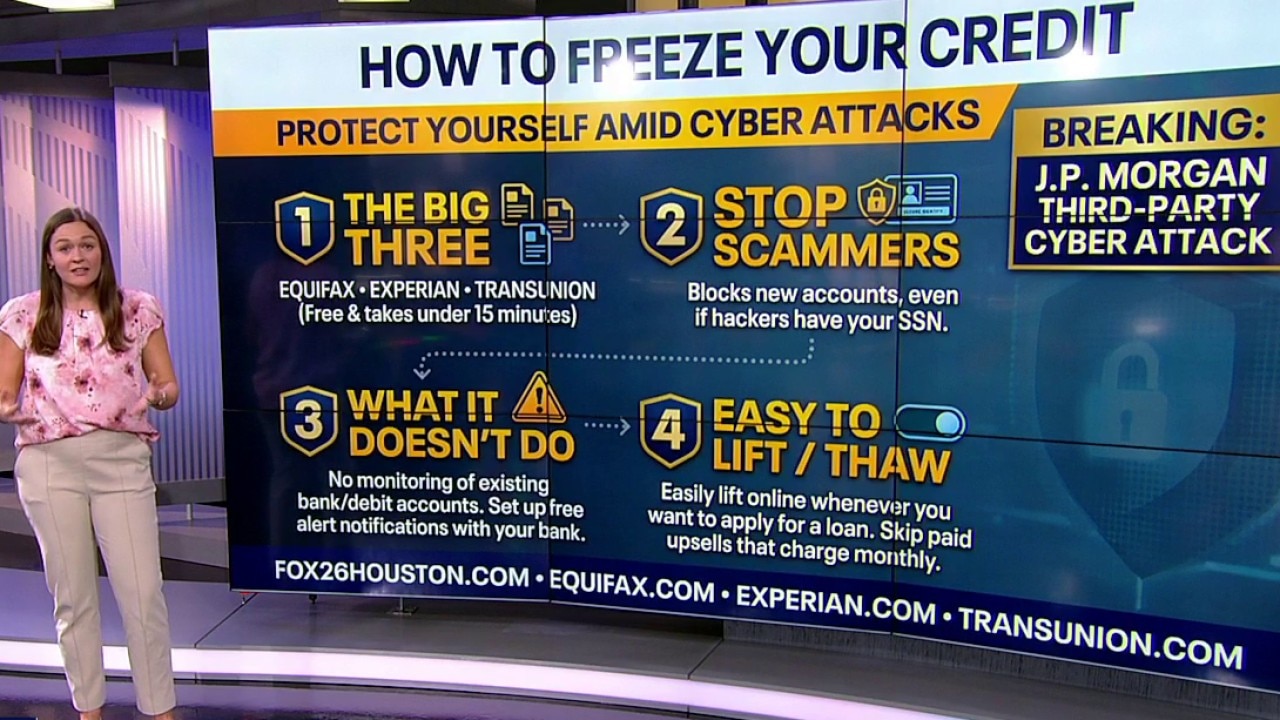
To fully protect your credit profile, you must place a freeze individually with each of the three major nationwide credit reporting agencies:
- Equifax: equifax.com
- Experian: experian.com
- TransUnion: transunion.com
Placing a freeze online or by phone is 100% free by law and typically takes less than 15 minutes to complete across all three bureaus.
Step 2: Skip the upsells:
When visiting the bureau websites, you may see advertisements or prompts offering paid monthly "credit lock" or credit monitoring bundles.
Consumer advocates warn viewers to skip those paid subscriptions and look specifically for the free Security Freeze option. Under federal law, a free security freeze blocks unauthorized new accounts just as effectively as paid services without charging a monthly fee.
What a credit freeze does
- Blocks new accounts: Even if a hacker already has your Social Security number from a data breach, a freeze stops criminals from opening new credit cards or taking out loans in your name.
- Current cards keep working: Freezing your credit does not freeze your actual credit or debit cards. You can continue shopping, paying bills, and earning rewards normally, and a freeze will not impact your credit score.
- Does not monitor existing bank accounts: A credit freeze only blocks new credit inquiries. Experts recommend pairing a freeze with free text or mobile app alerts from your bank so you can immediately spot suspicious charges on existing checking or debit accounts.
- A credit freeze is not permanent: Whenever you plan to apply for a new car loan, mortgage, credit card, or apartment lease, you can log back into your accounts with the three bureaus and temporarily lift—or "thaw"—the freeze. You can set the lift for a specific window of time, such as one or two days, after which your credit profile will automatically lock back up.