

Who pays for wild hog damage? Woodlands-area resident caught in $3,500 dilemma
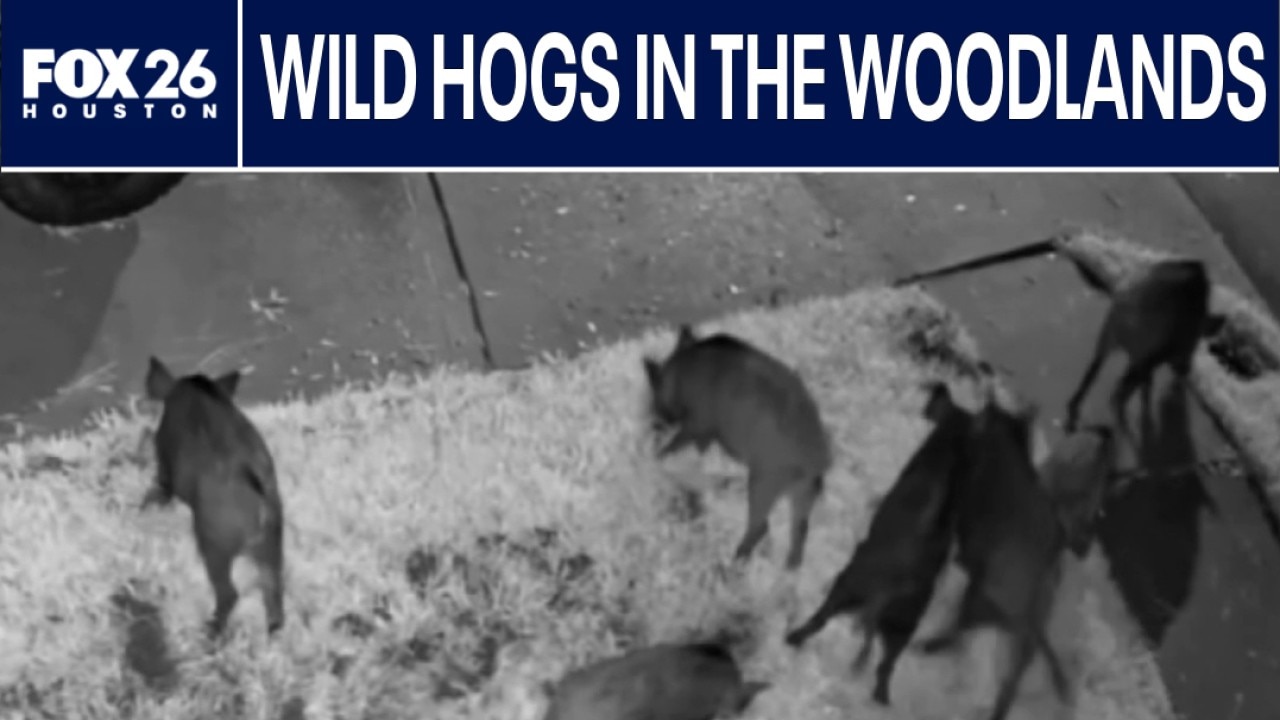
Wild hogs invade Montgomery County neighborhood, residents concerned about safety
A suburban neighborhood in Montgomery County is dealing with destructive—and unwelcome—visitors, as wild hogs continue to root through residential lawns during daylight hours. FOX 26's MeKenna Earnhart has more.
THE WOODLANDS, Texas - A suburban neighborhood in Montgomery County is dealing with destructive—and unwelcome—visitors, as wild hogs continue to root through residential lawns during daylight hours.
Wild hogs invade Montgomery County neighborhood, residents concerned about safety
What they're saying:
Janis Douglas, a resident living in the Conroe area near The Woodlands, woke up recently to find her newly landscaped yard turned completely upside down.
"This spring, I had new soil and new grass brought in. And I woke up the other morning and came out to this," Douglas said, pointing to large patches of uprooted turf. "It’s hogs coming through the woods next door and rooting all through my lawn."
Neighborhood cameras and resident sightings have spotted sounders of up to five hogs wandering through the area. While feral hogs typically roam at night, residents say some have been spotted out along suburban streets as late as 10:30 a.m.
Local perspective:
Edward Dickey, owner of Texas Wild Hog Control, says the uptick in neighborhood encounters is directly linked to rapid commercial and residential growth across Southeast Texas.
"As the city tends to grow, the neighborhoods tend to grow," Dickey said. "When construction companies come in and they clear land, a lot of times that will stir up the hogs and push them into the surrounding neighborhoods."
Dickey explained that weather pattern shifts also drive hogs directly into manicured communities.
"We've had a drought. It's kind of a catch-22 situation where, if there's a drought, that brings the hogs closer to the neighborhoods where the yards tend to be more moist because they're watered," Dickey said. "But then when we've got lots of rain, that also tends to stir the hogs up as well because that softens the dirt and opens up access to other feeding areas... It activates their biology and tends to make them a little more ravenous."
For Douglas, the damage is more than just an eyesore—it is an expensive safety concern. A nearby bus stop serves local children, and wild hogs pose serious physical and health risks.
"It's important to control the hog population because their breeding rate is extremely, extremely fast—they can have up to three litters per year," Dickey said. "They are extremely destructive as far as habitat, and they also are a vector for disease, whether it's brucellosis or anthrax... If they feel like they're cornered, then they can become defensive and can quite possibly kill someone."
Many homeowners attempt to scare hogs off using water sprayers, deterrent scents, or electric fences, but Dickey warns that DIY solutions and amateur hunting usually make the problem worse.
"Some people like to try to shoot at them, and that pretty much kind of just scatters the family groups, and they always return," Dickey said. "You want the trapper to be able to control the trap gate with their phone. You don't want something where the animal activates it by stepping on a pressure pad, because the younger ones will go in first while all the immature hogs stand around outside. They learn very quickly."
Finding a permanent solution has proven difficult for local residents. Douglas says private professional trapping can cost $3,500 or more out of pocket. Furthermore, because the adjacent wooded area where the hogs roam is owned by local township developers, rather than her private property, setting up trapping gear requires official authorization, she says.
"Most of the response I got was, 'This is not my department, I suggest you call so-and-so,'" Douglas said. "I can't even swing to just throw out $3,500... I don't feel like it's my responsibility to protect the entire neighborhood."
Dickey recommends that frustrated residents band together rather than fighting the battle alone.
"The best option probably is to get in contact with the HOA and get together with your neighbors," Dickey said. "Go to the HOA board, show them the damage, and try to educate them about the hogs and the fact that they will not stop. They're going to hit the edges of the neighborhood and then keep encroaching further and further."
Trappers advise homeowners facing similar hog damage to refrain from spending money to replant lost landscaping until the entire sounder can be captured and removed.
The Source: Edward Dickey, owner of Texas Wild Hog Control, Janis Douglas, a resident living in the Conroe area near The Woodlands