

Trump hints at 'friendly takeover' of Cuba
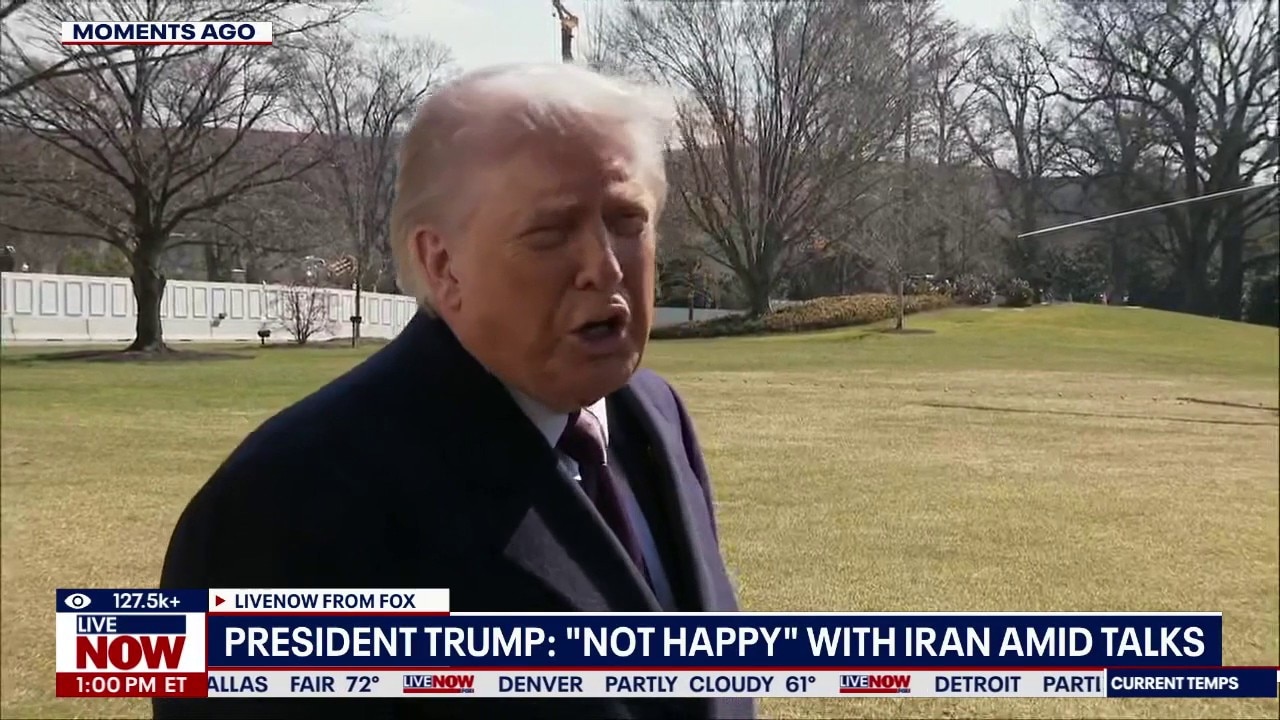
Trump says he's 'not happy' with Iran amid talks
Speaking to reporters Friday, President Trump discussed the state of talks with Iran and also hinted at a "friendly takeover" of Cuba.
President Donald Trump said Friday that the United States "could very well" have a "friendly takeover" of Cuba, a communist-run island that has been among Washington’s biggest adversaries for decades.
Trump made the comments while speaking to reporters outside the White House, but he didn’t offer any details on what he meant. Here’s the latest:
What did Trump say about Cuba?
What they're saying:
Trump told reporters Thursday that "the Cuban government is talking with us, as they're in a big scale of trouble."
"They have no money. They have no anything right now," he said. "But they're talking with us, and maybe we'll have a friendly takeover of Cuba. We could very well end up having a friendly takeover of Cuba."
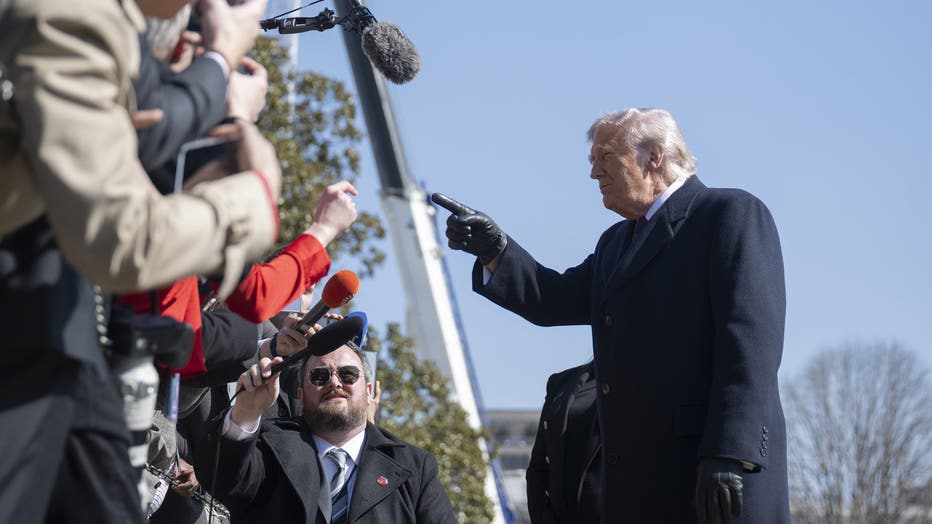
United States President Donald speaks to the press members ahead of his departure from the White House en route Corpus Christi, Texas on February 27, 2026, in Washington D.C., United States. (Photo by Celal Gunes/Anadolu via Getty Images)
Trump didn’t elaborate on what a "friendly takeover" would resemble, but he did say it would be "something good" and "very positive for the people that were expelled, or worse, from Cuba and live here."
READ MORE: US military accidentally shoots down own drone at Texas border, lawmakers say
"They want to go back to Cuba," he said.
Big picture view:
Trump’s remarks came two days after the Cuban government said a Florida-registered speedboat carrying 10 armed Cubans from the U.S. opened fire on soldiers off the island’s north coast. Four of the armed Cubans were killed, and six were injured in responding gunfire, Cuban officials said.
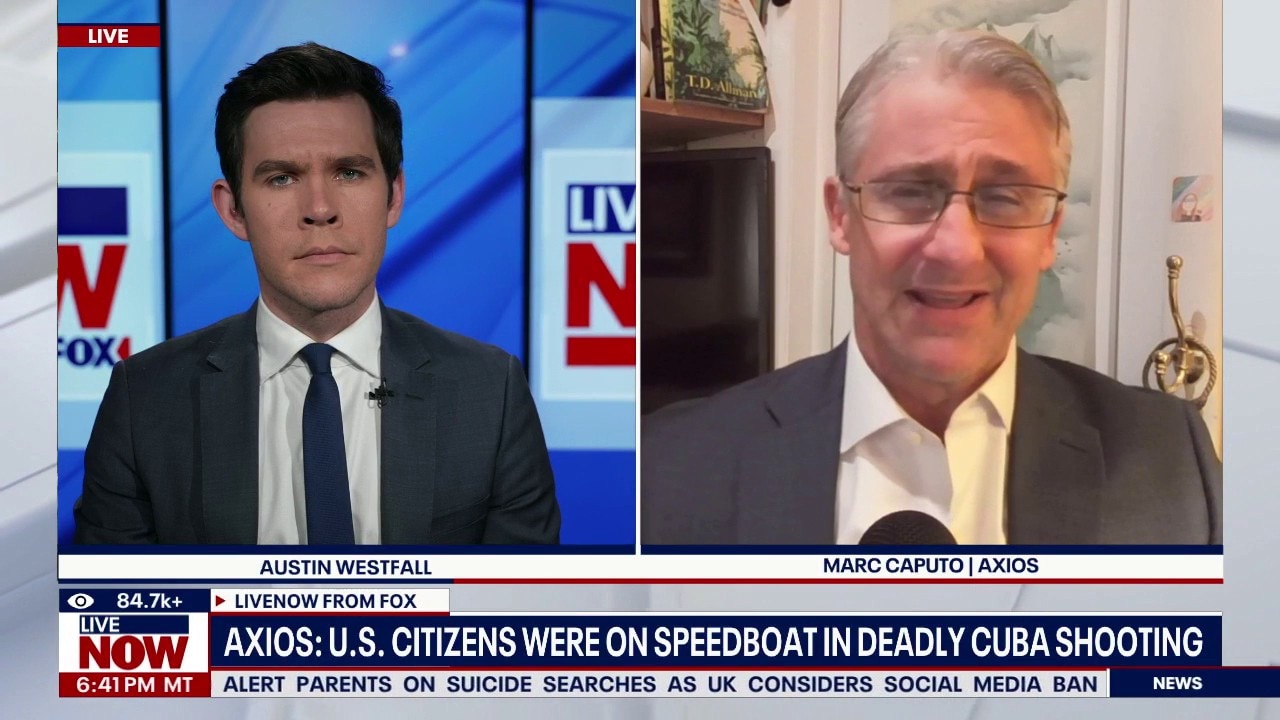
RPT: American killed by Cuban forces in boat shootout
We are now hearing reports from at least one US official that says at least one American citizen was shot dead by Cuban officials who were said to be intercepting a speedboat off its coast on Wednesday. Secretary of State Marco Rubio previously said the U.S. is working to determine whether the passengers were American citizens or permanent residents. LiveNOW’s Austin Westfall is speaking with Marc Caputo, a political journalist with Axios who has been following the speedboat shooting since learning about it this week.
Oil blockade cripples Cuba
Dig deeper:
Trump has been more focused on Cuba since January, when U.S. forces ousted Venezuela’s President Nicolás Maduro, one of Cuba’s closest allies.
RELATED: Who is Nicolás Maduro? Venezuelan president captured by US forces
In late January, Trump imposed a tariff on any goods from countries that sell or provide oil to Cuba. The order has severed the island from its primary energy sources and dealt a blow to the nation, especially to civilians.
Already unreliable public buses stopped running altogether, leaving many stranded. Ambulances are struggling to find fuel to respond to emergencies. Persistent outages have plagued deteriorated hospitals. Flights bringing vital supplies have been suspended as Cuba’s government says it’s now unable to refuel airplanes in its airports.
RELATED: Cuban Coast Guard kills 4, injures 6 in gunfire with Florida-based boat
Trump was asked by a reporter in January whether he was trying to "choke off" Cuba, which he has repeatedly called a "failing nation."
"The word ‘choke off’ is awfully tough," Trump said at the time. "I’m not trying to, but, it looks like it’s something that’s just not going to be able to survive."
Humanitarian crisis
The other side:
Experts and some leaders of other countries have warned that Cuba is on the verge of a humanitarian crisis. Dozens of U.S. social organizations – including the Alliance of Baptists and the Presbyterian Church – have asked Congress to "press the Trump administration to reverse its aggressive policy towards Cuba."
"Policies that deliberately impose hunger and mass hardship on millions of civilians constitute a form of collective punishment, and as such are a grave violation of international humanitarian law," the letter to Congress said.
The United Nations has also expressed concern about humanitarian conditions in Cuba.
Military presence in Cuba
The U.S. Navy has had a base in Cuba since 1903. The station at Guatanamo Bay is the oldest overseas naval base, and the only one in a communist-run country. Often referred to as "Gitmo," it's best known for the suspects brought there after the Sept. 11, 2001, attacks.
The Source: This article includes quotes from President Donald Trump and information from The Associated Press, the U.S. Navy's website and previous FOX Local reporting.