

Redistricting controversy, Floods, THC, abortion - breaking down this week's packed special session

Preview of Texas Legislature's special session topics
The Texas Legislature has convened a special session to tackle 18 agenda items, focusing on post-flood recovery, THC product regulation, and the highly contentious issue of congressional redistricting.
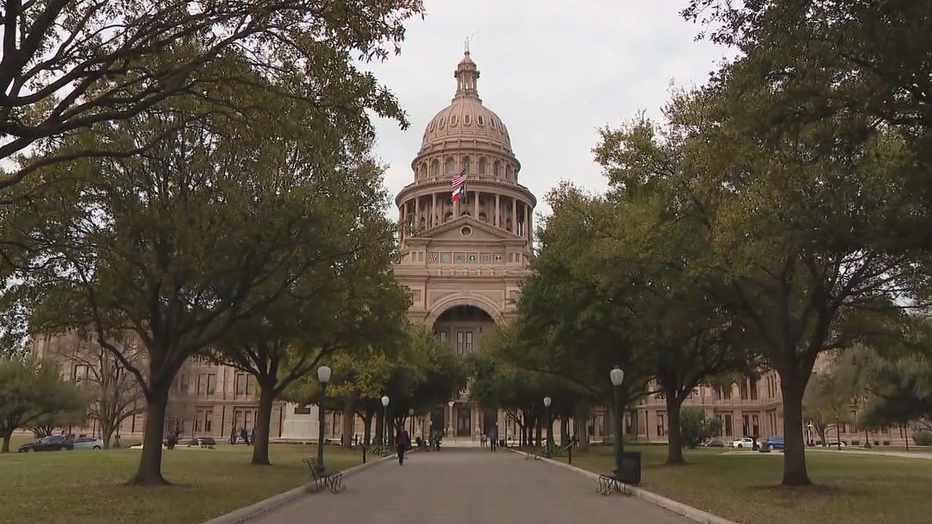
Texas lawmakers are back in Austin Monday as Governor Greg Abbott kicks off a special legislative session with a packed 18-item agenda that includes both disaster response and deeply divisive political issues.
What's a special session?
The special session, which begins at noon Monday, marks a continuation of unfinished business from the state’s 89th Regular Legislative Session, which wrapped earlier this year. Texas holds its regular session just once every two years for 140 days, making special sessions the governor’s tool of choice when issues are left unresolved.
At the top of the priority list: flood recovery. After deadly storms ravaged the Hill Country earlier this month, Abbott is asking lawmakers to pass legislation improving flood warning systems, emergency communication infrastructure, and providing relief funding to storm-stricken communities.
But the issues likely to cause the most debate are THC regulation and congressional redistricting.
Trending agenda-topics
THC: Regulate, Not Ban
One of the more controversial moves this session centers on Abbott’s veto of Senate Bill 3, which would have effectively banned consumable THC products.
The governor made it clear in a veto proclamation that he wants to see lawmakers consider regulation, not prohibition.
Earlier versions of the bill focused on limiting the kinds of products available, rather than outlawing them altogether. That framework may re-emerge as lawmakers work on other adjacent issues like restricting access to children under 21 and reining in the potency and synthetic modification of hemp-derived compounds.
Redistricting Pressure from Trump
Another political hot topic is redistricting - pushed heavily by President Donald Trump, according to reports. Trump held a call with Texas' Republican congressional delegation and sources confirmed to Fox News that the president told the lawmakers that he was aiming to redraw the maps to create five new winnable seats. The pressure is now on Texas Republicans to re-draw the state’s 38 congressional districts to boost GOP chances in the 2026 midterms, with the aim of flipping 3 to 5 Democratic-held seats.
Currently, Republicans control 25 congressional seats, while Democrats hold 13. But strategists warn that a partisan redistricting play could backfire by alienating moderate voters or triggering legal challenges.
"The dilemma for Republicans during this session is how do they satisfy the president in redistricting to try to increase the number of republican seats won in 2026 without jeopardizing republican-held seats that are currently safe that would become vulnerable if the republican vote in those districts is diluted," said political Analyst Mark Jones.
The Texas Democratic Party put out a statement last week saying that the targeted districts are TX-09, TX-18, TX-29, and TX-33.
Full agenda
Dig deeper:
This special session is expected to run for up to 30 days. But if lawmakers can’t reach an agreement, Abbott could call them back again.
Here is the full agenda for the special session, as listed by a release from Gov. Abbott's Office:
- FLOOD WARNING SYSTEMS: Legislation to improve early warning systems and other preparedness infrastructure in flood-prone areas throughout Texas.
- FLOOD EMERGENCY COMMUNICATIONS: Legislation to strengthen emergency communications and other response infrastructure in flood-prone areas throughout Texas.
- RELIEF FUNDING FOR HILL COUNTRY FLOODS: Legislation to provide relief funding for response to and recovery from the storms which began in early July 2025, including local match funding for jurisdictions eligible for FEMA public assistance.
- NATURAL DISASTER PREPARATION & RECOVERY: Legislation to evaluate and streamline rules and regulations to speed preparedness for and recovery from natural disasters.
- ELIMINATE STAAR TEST: Legislation to eliminate the STAAR test and replace it with effective tools to assess student progress and ensure school district accountability.
- CUT PROPERTY TAXES: Legislation reducing the property tax burden on Texans and legislation imposing spending limits on entities authorized to impose property taxes.
- PROTECT CHILDREN FROM THC: Legislation making it a crime to provide hemp-derived products to children under 21 years of age.
- REGULATE HEMP-DERIVED PRODUCTS : Legislation to comprehensively regulate hemp-derived products, including limiting potency, restricting synthetically modified compounds, and establishing enforcement mechanisms, all without banning a lawful agricultural commodity.
- PROTECT UNBORN CHILDREN: Legislation further protecting unborn children and their mothers from the harm of abortion.
- BAN TAXPAYER-FUNDED LOBBYING: Legislation prohibiting taxpayer-funded lobbying, including the use of tax dollars to hire lobbyists and payment of tax dollars to associations that lobby the Legislature.
- PROTECT HUMAN TRAFFICKING VICTIMS: Legislation, similar to Senate Bill No. 1278 from the 89th Legislature, Regular Session, that protects victims of human trafficking from criminal liability for non-violent acts closely tied to their own victimization.
- POLICE PERSONNEL RECORDS: Legislation that protects law enforcement officers from public disclosure of unsubstantiated complaints in personnel files.
- PROTECT WOMEN’S SPACES: Legislation protecting women’s privacy in sex-segregated spaces.
- ATTORNEY GENERAL ELECTION POWERS: Legislation proposing a constitutional amendment allowing the Attorney General to prosecute state election crimes.
- REDISTRICTING: Legislation that provides a revised congressional redistricting plan in light of constitutional concerns raised by the U.S. Department of Justice.
- TITLE THEFT & DEED FRAUD: Legislation, similar to Senate Bill No. 648 from the 89th Legislature, Regular Session, that provides strengthened protections against title theft and deed fraud.
- WATER PROJECT INCENTIVES: Legislation, similar to Senate Bill No. 1253 from the 89th Legislature, Regular Session, that authorizes political subdivisions to reduce impact fees for builders who include water conservation and efficiency measures.
- STATE JUDICIAL DEPARTMENT: Legislation, similar to Senate Bill No. 2878 from the 89th Legislature, Regular Session, relating to the operation and administration of the Judicial Department of state government.
The Source: Office of Governor Gregg Abbot, Texas Democratic Party, FOX News reporting