

Artemis II launch delayed to March after issues during wet dress rehearsal
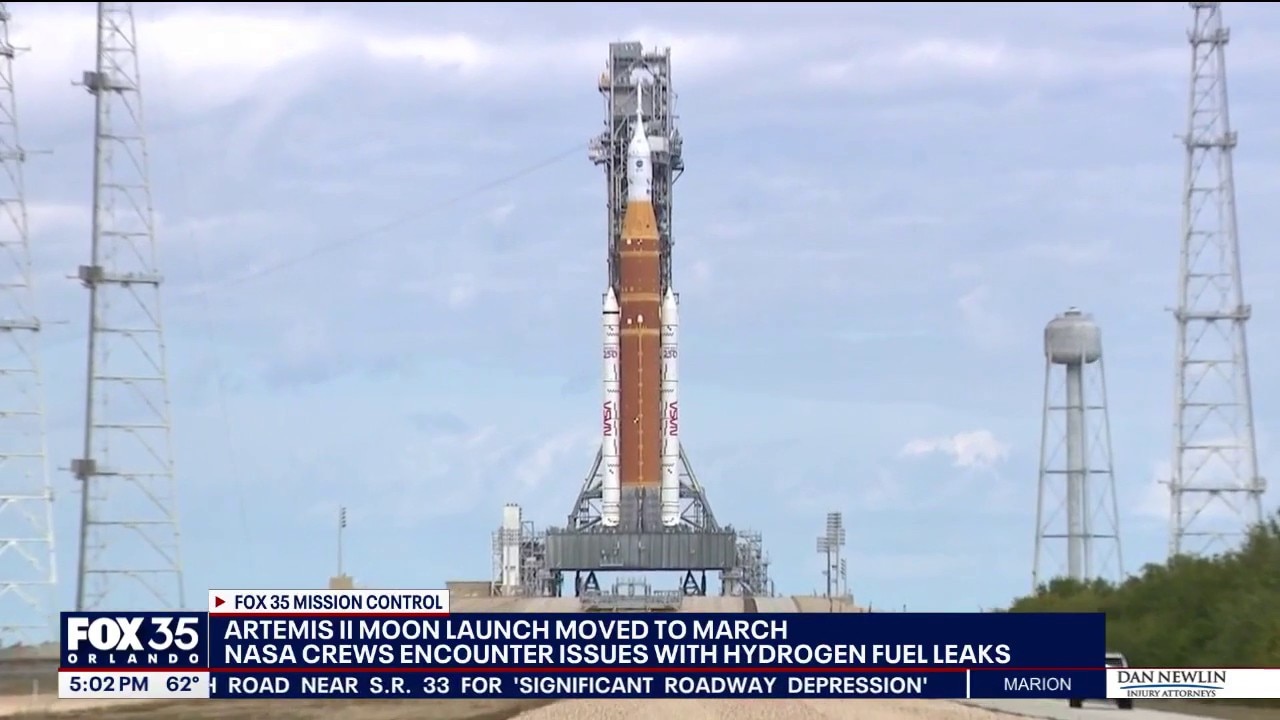
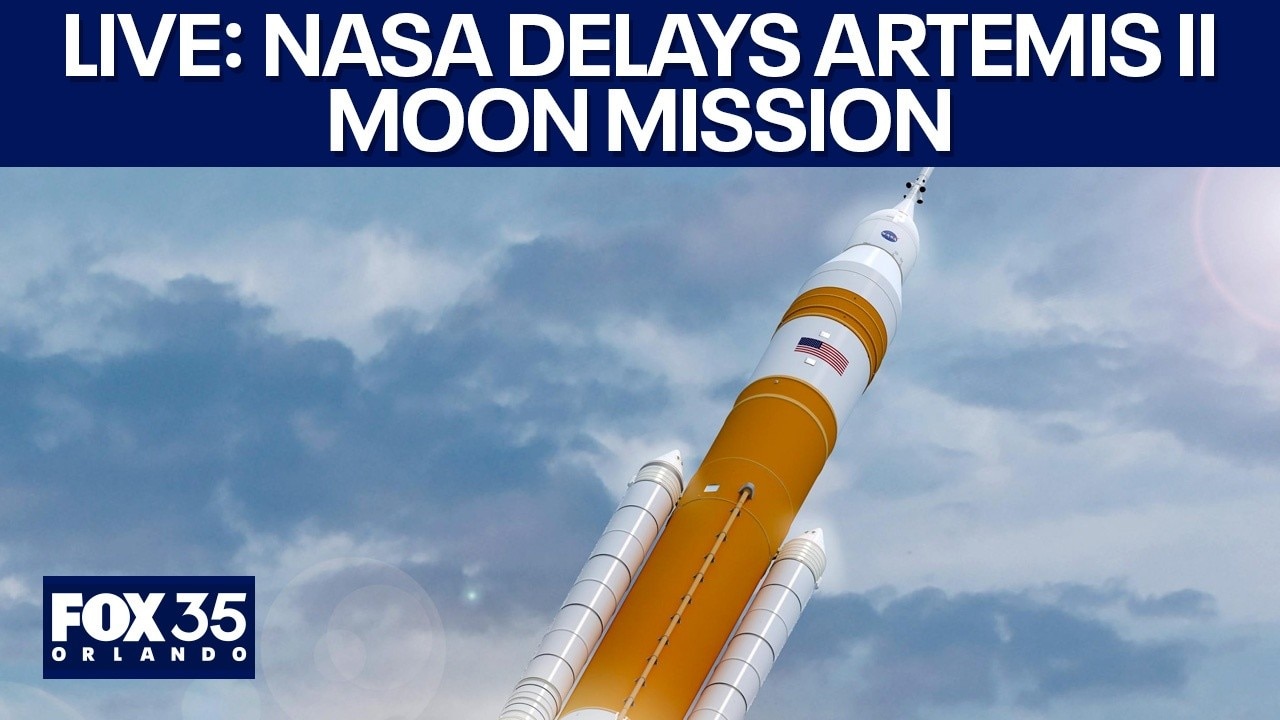
NASA delays Artemis II moon mission after hydrogen leaks
NASA has postponed its Artemis II mission around the moon until at least March after engineers detected liquid hydrogen leaks during a critical launch rehearsal at Kennedy Space Center, reviving issues that delayed the program’s first flight.
BREVARD COUNTY, Fla. - NASA has pushed back a possible launch of the Artemis II moon mission to March after issues were encountered Monday during a test run at Kennedy Space Center.
The mission, which will send four astronauts on a historic trip around the moon, was expected to launch as early as Feb. 8.
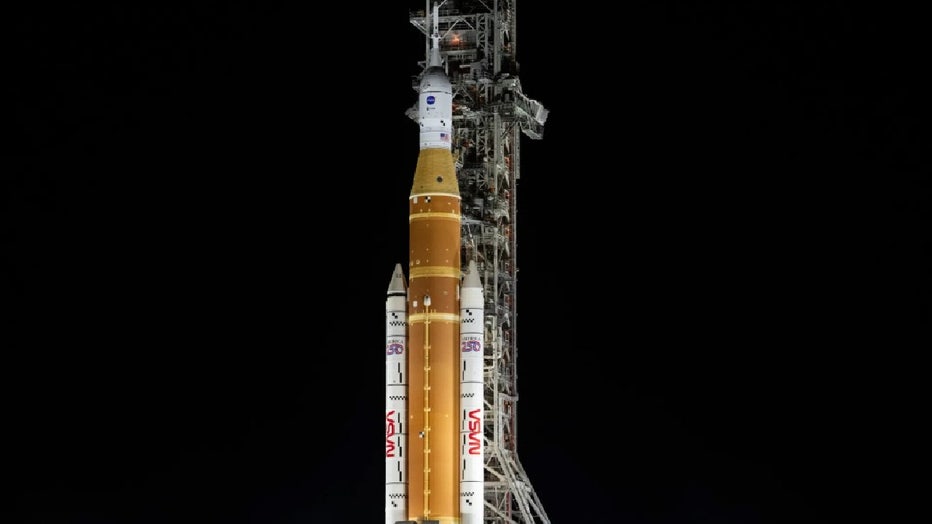
NASA’s Space Launch System (SLS) rocket and Orion spacecraft, secured to the mobile launcher, are seen at Launch Pad 39B, Saturday, Jan. 17, 2026, at NASA’s Kennedy Space Center in Florida. (Courtesy: NASA/Joel Kowsky)
However, during a wet dress rehearsal, a crucial pre-launch test, NASA said it encountered several problems, including issues with liquid hydrogen leaks while fueling the Space Launch System (SLS) rocket.
"Engineers pushed through several challenges during the two-day test and met many of the planned objectives," NASA said in a blog post early Tuesday.
The backstory:
While the news is a setback for the first crewed mission of the Artemis program, the technical challenges – specifically liquid hydrogen leaks – are a familiar foe for the agency.
CLICK TO DOWNLOAD THE FOX LOCAL APP
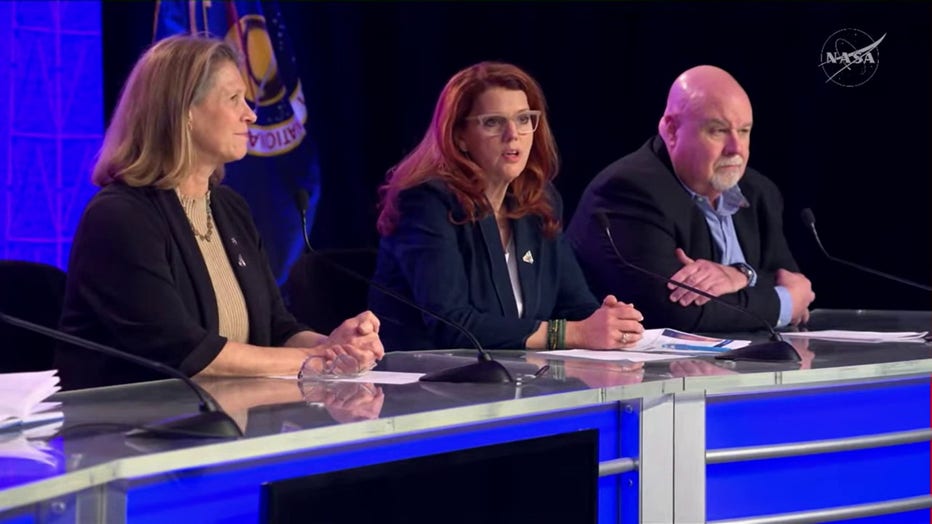
Discussing Artemis II first wet dress rehearsal are Lori Glaze, acting associate administrator for NASA's Exploration Systems Development Mission Directorate, Charlie Blackwell-Thompson, NASA’s Launch Director, and John Honeycutt, chair, Artemis II M
During the lead-up to the uncrewed Artemis I mission three years ago, NASA faced similar hydrogen leaks that resulted in nearly eight months of delays before a successful liftoff.
Lori Glaze, acting associate administrator for the Exploration Systems Development Mission Directorate, noted that while progress has been made, the complexity of the Space Launch System (SLS) rocket requires more preparation.
"We have a lot more work to do to get ready," Glaze said.
What happened during the test?
What we know:
The wet dress rehearsal is a "full-up" simulation where teams load the SLS rocket with more than 700,000 gallons of cryogenic propellant and count down to the final minutes before launch.
SIGN-UP FOR FOX 35'S BREAKING NEWS, DAILY NEWS NEWSLETTERS
The team was eventually able to get the rocket filled with more than 700,000 gallons fuel containing liquid hydrogen and liquid oxygen during the wet dress rehearsal. However, the test was eventually terminated at the T-5 minute and 15-second mark due to a spike in a liquid hydrogen leak.
Watch the press conference: NASA Artemis II update
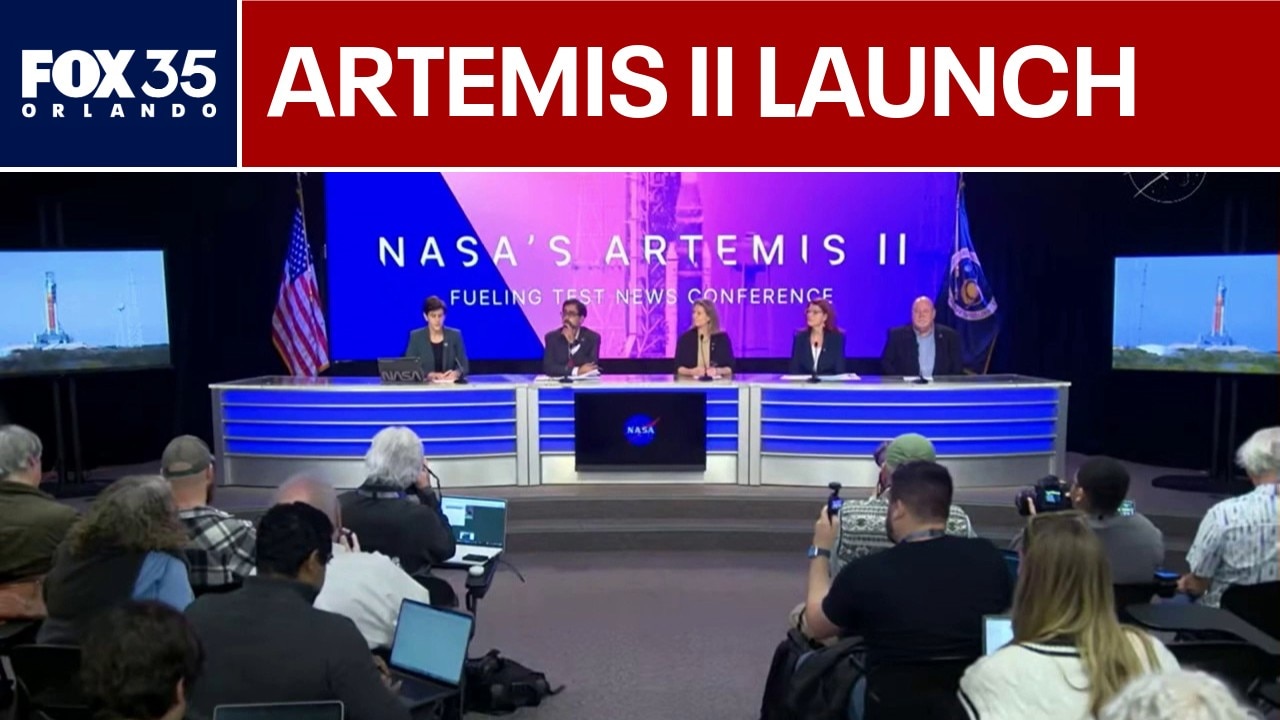
NASA pushes Artemis II launch window to March
PRESS CONFERENCE | NASA has pushed back a possible launch of the Artemis II moon mission to March after issues were encountered Monday during a test run at Kennedy Space Center. "Engineers pushed through several challenges during the two-day test and met many of the planned objectives," NASA said in Feb. 3 blog post.
Other complications included:
- Orion hatch issues: A recently replaced valve associated with the Orion crew module hatch pressurization required "retorquing," making the closeout process take longer than planned.
- Communication gaps: Ground teams experienced intermittent audio communication dropouts, a problem engineers had been tracking for several weeks.
- Extreme weather: The test took place during a historic cold front in Florida. While the cold affected some cameras and equipment, heat purges kept the rocket itself safe.
What they're saying:
"This is precisely why we conduct a wet dress rehearsal," NASA administrator Jared Isaacman wrote in a post on X. "These tests are designed to surface issues before flight and set up launch day with the highest probability of success."
Isaacman confirmed the Artemis II March launch window, saying, "The team will fully review the data, troubleshoot each issue encountered during WDR, make the necessary repairs, and return to testing. We expect to conduct an additional wet dress rehearsal and then target the March window."
Reflecting on the unexpected hurdles, John Honeycutt, Chair of the Artemis II Mission Management Team, said, "We do the best we can. Actually, this one caught us off guard."
However, Charlie Blackwell-Thompson, NASA’s Launch Director, emphasized that the ground systems performed their primary job: protecting the hardware. "In terms of taking care of the hardware at the pad, we had all the right things in place," she said.
What's next after the Artemis II delay? Expert explains
NASA held a news conference Tuesday afternoon following a delay of the launch of Artemis II after a wet dress rehearsal. Ken Kremer, managing editor of Space Upclose, joined FOX 35's Garrett Wymer live via Zoom to discuss the details.
A trip around the moon
A crew of four astronauts—NASA’s Reid Wiseman, Victor Glover and Christina Koch, as well as Canadian Space Agency’s Jeremy Hansen—will embark on a 10-day trip around the moon.

From left to right, CSA (Canadian Space Agency) astronaut Jeremy Hansen and NASA astronauts Christina Koch, Victor Glover, and Reid Wiseman stand outside before boarding their Orion spacecraft inside the Vehicle Assembly Building at NASA’s Kennedy Sp
The mission will be the first crewed mission to the moon in 50 years.
The astronauts, who have been in quarantine in Houston since Jan. 21, will be released from quarantine because of the delay.
NASA said the crew will enter quarantine again about two weeks before the next launch date. An exact launch date has not yet been announced.
"As always, safety remains our top priority, for our astronauts, our workforce, our systems, and the public," Isaacman said. "As noted above, we will only launch when we believe we are as ready to undertake this historic mission."
What's next:
NASA is now targeting March for the next launch opportunity.
Before then, the agency will do a second wet dress rehearsal to ensure they fixed the problems at the pad.
The timing is critical. If repairs take too long and the mission misses the March window, NASA may be forced to roll the 322-foot rocket back to the Vehicle Assembly Building (VAB). Unlike Artemis I, the agency is trying to complete these repairs at the pad, but the clock is ticking on the life of the rocket's internal batteries.
"If we go beyond the March time window, we probably would have to roll back in order to access those batteries," Glaze explained.
Despite the delay, NASA leadership remains focused on the "big picture" of flight safety.
"To me, the big takeaway was we got a chance for the rocket to talk to us. It did just that," said Honeycutt.
Isaacman echoed this sentiment on social media, stating that challenges were expected after a three-year gap between SLS launches.
"These tests are designed to surface issues before flight and set up launch day with the highest probability of success," Isaacman wrote on X.
The Source: This article was written with information from NASA and reporting from the FOX 35 Digital Team and reporter Esther Bower.