

Dog among 2 new screwworm cases; Canada blocks Texas livestock imports
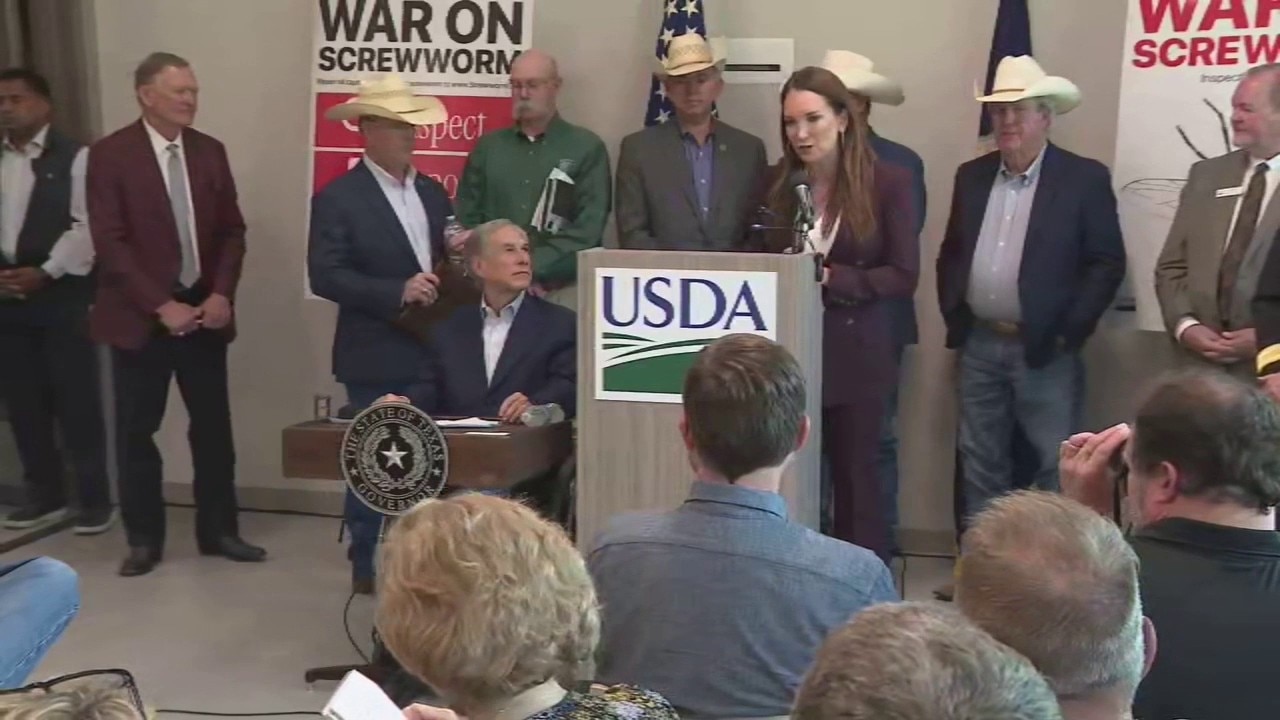
Governor Abbott and USDA Secretary Rollins discuss screwworm response
Governor Greg Abbott and USDA Secretary Brooke Rollins hold an emergency briefing in Kerrville to address the New World screwworm outbreak in Texas.
The U.S. Department of Agriculture (USDA) on Monday confirmed two additional cases of New World screwworm, widening a multi-agency response that has already triggered international trade restrictions.
Outbreak widens with new cases
What we know:
The latest cases involve a calf in La Salle County and a dog in New Mexico. According to the USDA’s Animal and Plant Health Inspection Service (APHIS), preliminary investigations indicate the infested dog had recently been in Mexico, where the parasite is known to be present.
Officials had previously said the dog was in Andrews County, Texas; however, they have since changed this as while the case was reported in Andrews County, the dog actually resides in Lea County, New Mexico.
With these new detections, federal officials have now confronted four confirmed cases of the flesh-eating pest over the past week.
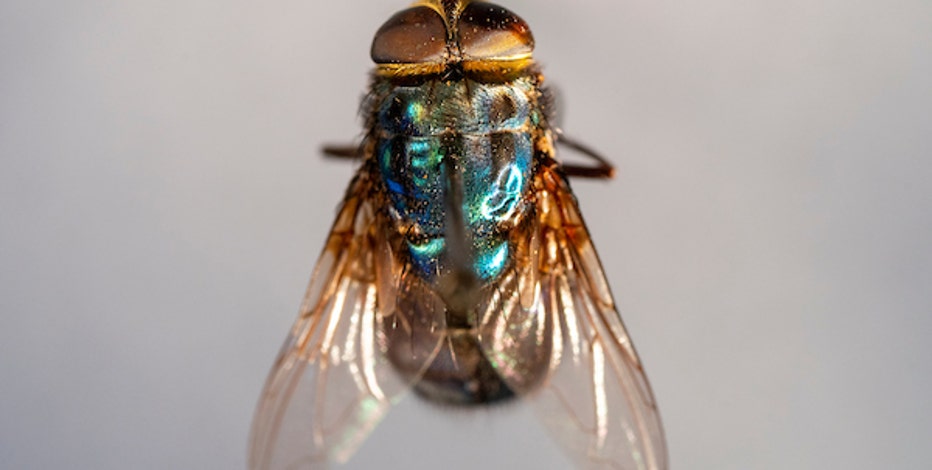
New World screwworm in Texas: New case detected in Zavala County
A second case of New World screwworm has been detected in Texas, mere miles away from the first.
Canada imposes import ban
The announcement comes just as the Canadian Food Inspection Agency (CFIA) implemented emergency import restrictions on all livestock, including horses, entering Canada from Texas.
Under the Canadian mandate, any animal that originated from or traveled through Texas within 21 days of reaching a border crossing will be denied entry to prevent the parasite from moving north during the warmer summer months.
About NWSW:
The New World screwworm is a destructive parasitic fly whose larvae burrow into the living tissue of warm-blooded animals, causing severe, often fatal wounds and significant economic losses for livestock producers. While it primarily threatens livestock, wildlife, and pets, it can in rare cases, infest humans. Officials emphasized that the U.S. food supply remains entirely safe, as the pest does not infest meat or agricultural products.
What they're saying:
"While we address these instances that require immediate attention... we are simultaneously working to eradicate the pest entirely," said Dudley Hoskins, Under Secretary for Marketing and Regulatory Programs. "We need the partnership of animal owners across the region – please stay vigilant, check your animals closely, and report anything that looks suspicious."
What's next:
In response to the growing outbreak, the USDA and the Texas Animal Health Commission (TAHC) have deployed an aggressive unified force of 75 ground personnel and hundreds of support staff nationwide. Authorities are establishing 20-kilometer (12-mile) quarantine and movement-control zones around the confirmed detections, increasing trapping along the Mexican border, and conducting wildlife surveillance.
Featured
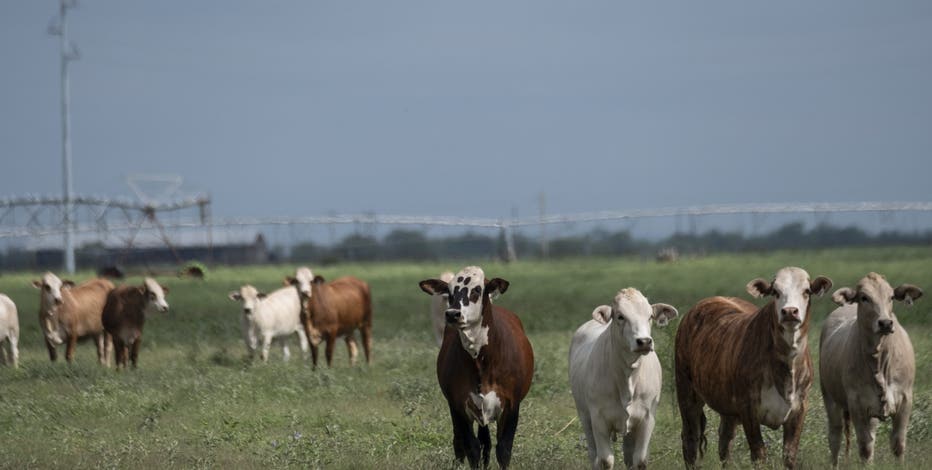
Screwworms in Texas: What an infestation means for livestock, beef supply and the economy
The return of the flesh-eating screwworm fly in Texas has ranchers and government agencies scrambling to contain what could threaten a $113 billion cattle industry in the U.S.
Sterile fly release
To halt the pest's reproduction cycle, the USDA has activated a sterile fly dispersal facility at Moore Air Base in Edinburg, Texas. Aerial dispersal flights are scheduled to begin Tuesday to release millions of sterile flies over the infested areas. The sterile insects are dyed with a fluorescent green or orange marker that glows under UV light, allowing animal health officials to easily distinguish them from wild, fertile flies if captured in monitoring traps.
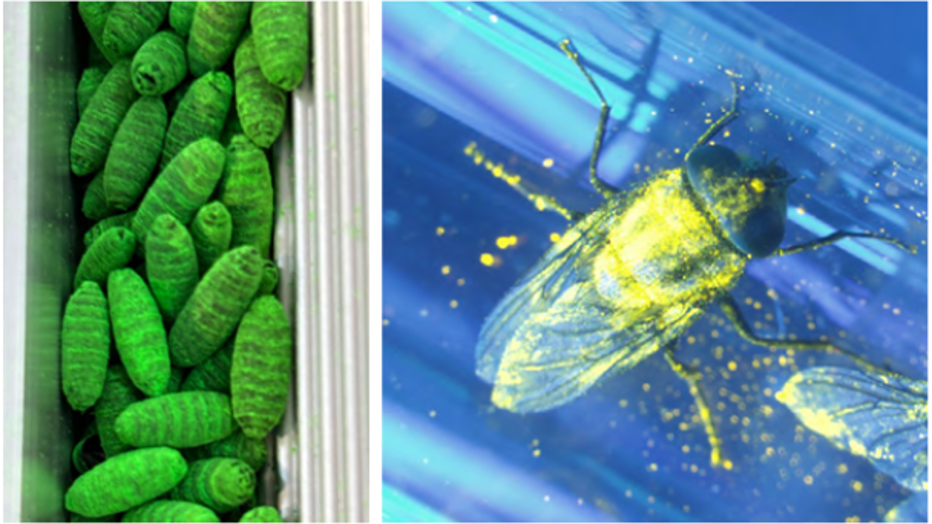
Dyed sterile NWS pupae (left); sterile NWS fly glowing under UV light (right)
In Canada, the New World screwworm is classified as an immediately notifiable disease under the Health of Animals Act, requiring laboratories to report any suspected cases immediately.
Both U.S. and Canadian authorities are urging livestock owners, veterinarians, and pet travelers to rigorously inspect animals for draining or enlarging wounds, visible maggots, or unusual discharge. Any suspected infestations in the U.S. should be reported immediately to state animal health officials or the USDA.
The Source: Information in this article is from the Government of Canada and previous FOX Local coverage. Editor's note: This story has been updated to reflect that officials have updated information about the dog case and say it is now being counted as a case in New Mexico, not Texas.