

Texas A&M sued over policy restricting teaching of race, gender

Texas A&M faces lawsuit over teaching restrictions
The lawsuit argues the policy is vague and unlawfully censors certain viewpoints in violation of the First Amendment.
COLLEGE STATION, Texas - A group of Texas A&M professors and a national faculty organization have filed a federal lawsuit challenging a university system policy that restricts how race, gender, sexual orientation and gender identity can be taught, arguing the policy violates the First Amendment and academic freedom.
Texas A&M lawsuit

What we know:
The lawsuit, filed Monday in federal court by the American Association of University Professors and four professors: Leonard Bright, Vanita Reddy, Landon Sadler and Aaron George, asks a judge to declare the policy unconstitutional, block its enforcement and reinstate courses canceled under the policy.
Under the Texas A&M University System policy, courses cannot advocate for race or gender ideology or topics concerning sexual orientation or gender identity. The policy bars core curriculum courses from teaching those topics and requires non-core and graduate-level courses to receive approval from the campus president before addressing them.
The lawsuit alleges the restrictions have led professors to self-censor, alter syllabi, remove course materials and cancel classes because the policy is too vague to determine what is permitted.
Faculty and ACLU allege First-Amendment, academic freedom violations
What they're saying:
ACLU attorney Emerson Sykes called the policy an "egregious attack on academic freedom."
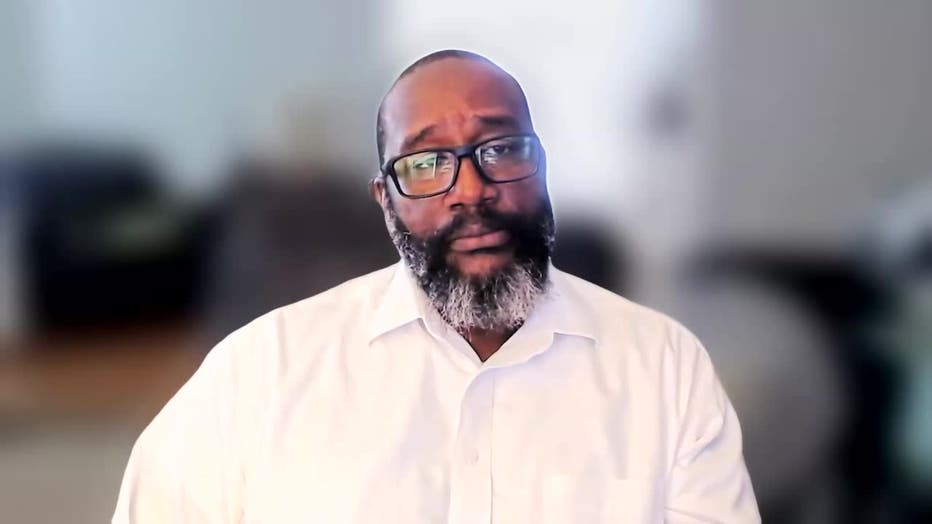
"This broad policy and the university's opaque enforcement process makes it impossible to teach or to learn freely and endangers course content about everything from the history of slavery to Shakespeare to the hard sciences. Universities are sites of inquiry, debate, and discovery. Banning entire categories of ideas is a betrayal of both their mission and the First Amendment," Sykes said.
Leonard Bright, a Texas A&M professor and one of the plaintiffs, said the policy prevented him from continuing to teach a graduate-level ethics course he had taught for the past seven years.
"You needed approval, or I needed to specify every instance that these topics were going to come up in a graduate-level discussion format, where class was very much organic," Bright said. "I couldn't do that. They said, 'Then you can't teach it.'"
Bright said discussions about race and gender are essential in higher education, regardless of individual political beliefs.
"Irrespective of anybody's views about race, gender, any of that kind of stuff, it is vital. It is vital in the classroom," Bright said. "It's vital for students to understand how those topics may impact what they do and understand the various points of view that wrap around all those identities."
From Plato to LGBTQ+, gender ideology rules

COLLEGE STATION, TEXAS - MARCH 6: Attends a protest sponsored by Texas A&M University Queer Empowerment Council's Day of Drag protest on campus in College Station on Thursday, March 6, 2025. The protest was against the school system's recent
Dig deeper:
The lawsuit claims the policy's extensive syllabus review process has resulted in prohibitions on Plato's writings on gender and the Oscar-winning film Moonlight. It also alleges the university system has taken a one-sided approach to reviewing course content. According to the complaint, one professor was prohibited from teaching about the Fourteenth Amendment's expansion of LGBTQ rights but was allowed to teach about Phyllis Schlafly's opposition to gender equality under the Equal Rights Amendment.
The lawsuit alleges the policy is purposely vague because it does not define what it means to "advocate," even though advocacy is prohibited under the rules.
The policy defines "gender ideology" as "a concept that self-assessed gender identity should replace the biological category of sex or that biological sex has less value or legitimacy than self-assessed gender identity."
It defines "race ideology" as "a concept that attempts to shame a particular race or ethnicity, accuse them of being oppressors in a racial hierarchy or conspiracy, ascribe to them less value as contributors to society and public discourse because of their race or ethnicity, or assign them intrinsic guilt based on the actions of their presumed ancestors or relatives in other areas of the world."

COLLEGE STATION, TX - AUGUST 17: The Texas A&M campus in College Station, Texas on August 17, 2023. (Photo by Mark Felix for The Washington Post via Getty Images)
The lawsuit states professors are not prevented from advocating against the views outlined in the policy.
The ACLU of Texas said the policy has caused courses to be canceled or forced to remove content and led to the elimination of the university system's women's and gender studies program.
"This policy directly harms Black, Brown, LGBTQIA+, and all other Texans who have historically been discriminated against by subjecting discussion of their rights, identities, and indeed very existence to heavy-handed censorship," ACLU of Texas staff attorney Chloe Kempf said. "What's more, it undermines all Texans' First Amendment rights."
Texas A&M System vows to defend curriculum restrictions
The other side:
System spokesperson Chris Bryan said the lawsuit was without merit and the system would "vigorously defend" its policies.
"The A&M System remains focused on the important work of supporting our students and fulfilling our duty to the state," Bryan said. "We will vigorously defend our policies and procedures."
Texas A&M implements restrictions on classroom discussions of race, gender, sexual orientation and gender identity

Texas A&M regents approved the system wide restrictions after a video of a professor discussing gender identity in a children's literature course went viral. The controversy led to the firing of the professor and eventually the departure of then-Texas A&M President Mark Welsh III after criticism from state leaders.
System Chancellor Glenn Hegar later ordered an audit of courses across the university system to ensure compliance with state law. Regents adopted the policy in late 2025 and later revised it. It also prohibits faculty from teaching material inconsistent with an approved syllabus.
Origins of the controversy
The backstory:
Multiple faculty organizations sued the Texas Tech University System last month over similar restrictions they argue limit professors' academic freedom.
Bright said he is concerned similar policies are spreading across higher education.
"I don't care if it's just two of them. It's still too many. Universities are turning their backs on their promise to provide a full and complete education to our students," Bright said.
'Institution of dead dogmas': Texas A&M professor resigns over trans, race-related policy
The philosophy professor at the center of January's controversy at Texas A&M University over writings by Plato being removed from coursework has turned in his resignation.
What the lawsuit is asking for
What's next:
The lawsuit asks the court to find the policy unconstitutional and in violation of the First and Fourteenth Amendments. It also seeks an order blocking Texas A&M from enforcing the policy and requiring the university system to reinstate courses canceled under the policy.
The Source: Information in this article comes from court filings in U.S. District Court for the Southern District of Texas and previous FOX Local reporting.