

Possible radioactive shrimp recall: Where is the contamination coming from?

Contaminated shrimp and seafood fraud
A new report shows some Texas restaurants say they're selling Gulf shrimp but it's not. FOX 26's Heather Sullivan digs into the recent shrimp recall due to radioactive contamination.
HOUSTON - Some shrimp sold at Kroger stores are being recalled for possible radioactive contamination. How can shrimp become radioactive? Let's peel back the layers.
The U.S. FDA is announcing the recall of more cooked and frozen shrimp sold at Kroger stores due to concerns about potential radioactive contamination.
Recall on possible radioactive shrimp
Aquastar Corp. recalled 157,000 additional pounds of shrimp because of possible contamination with Cesium 137, a radioactive isotope that can increase the risk for cancer.
That includes 50,000 bags of Kroger Raw Colossal EZ Peel Shrimp, 18,000 bags of Kroger Mercado Cooked Medium Peeled Tail-Off Shrimp, and 17,000 bags of AquaStar Peeled Tail-on Shrimp Skewers. These were sold between June 12 and September 17, 2025.
In August, the FDA also warned consumers not to eat certain frozen shrimp imported from PT. Bahari Makmur Sejati, an Indonesian company that does business as BMS Foods.
Where is this possible radioactive contamination coming from?
What we know:
The Food and Drug Administration says cesium 137 is a byproduct of nuclear reactions and can increase the risk for cancer.
The FDA says cesium 137 was detected in shipping containers from the Indonesian company BMS Foods that was sent to several U.S. ports, as well as in a sample of frozen breaded shrimp.
The US EPA explains that when radioactive materials are improperly disposed of and end up in scrap metal yards, it can be recycled into new materials, such as shipping containers.
Featured
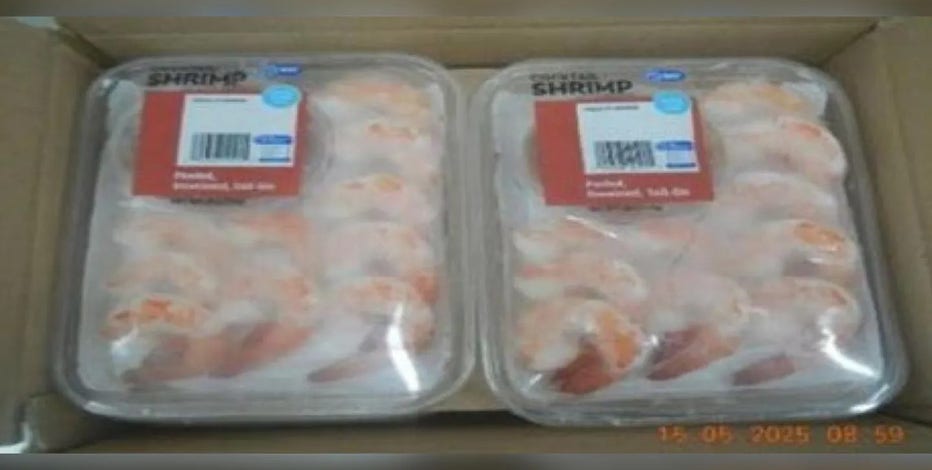
FDA expands radioactive shrimp recall amid concerns over possible contamination
The FDA advises customers to dispose of the affected shrimp
The FDA says none of the shrimp that tested positive for cesium 137 was released for sale. But they're concerned that other shipments may have been manufactured under the same conditions.
Experts in nuclear radiation say the health risk is low.
The level of cesium 137 detected in the frozen shrimp was about 68 becquerels per kilogram, well below the FDA's limit of 1,200 becquerels per kilogram.
Some Texas restaurants falsely claim to serve Gulf shrimp
In other shrimp-related news, a new study reports that some Texas restaurants that claim to serve Gulf shrimp have actually been serving shrimp imported from somewhere else.
SeaD Consulting says that it conducted a study between July 23 and 28, 2025. The study found only 19 of 44 restaurants tested in Corpus Christi, Port Aransas, and the Rockport/Fulton area served legitimate Gulf shrimp.
They say the other 57% falsely claimed to sell Gulf shrimp on their menu and advertising. They do not name those restaurants in their report.
SeaD also released a report last year that found 60% of restaurants tested in Galveston and Kemah said they served Gulf shrimp that was actually imported.
This year, Texas lawmakers passed Senate Bill 823, which took effect September 1, stating that restaurants can be penalized for mislabeling imported shrimp as "Texas," "American," "domestic," or "Gulf" shrimp.
Experts say while imported shrimp is often cheaper, mislabeling can hurt the local shrimping industry and results in dishonest marketing.
The Source: Information in this article is from the U.S. FDA, the U.S. EPA, SeaD Consulting, and the Southern Shrimp Alliance.