

Health officials track 2 Texas residents exposed to rare hantavirus on MV Hondius cruise ship
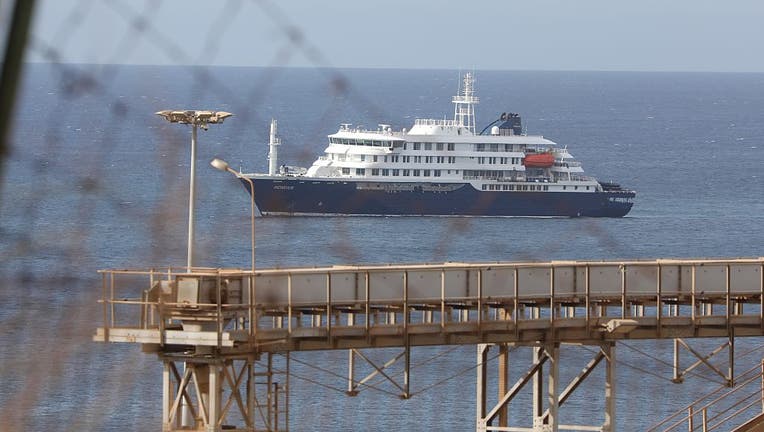
The Dutch cruise ship MV Hondius is anchored off Praia, Cabo Verde, May 6, 2026. Cabo Verde on Wednesday carried out an air evacuation of three passengers suspected of hantavirus infection from the Dutch cruise ship MV Hondius, which had been anchore
Two Texas residents are among the passengers who traveled aboard the MV Hondius, a luxury cruise ship currently struggling with a rare and deadly outbreak of the Andes hantavirus in the Atlantic Ocean, state health officials confirmed Thursday.
Hantavirus outbreak
The Texas Department of State Health Services (DSHS) announced that the Centers for Disease Control and Prevention notified the state after the two individuals returned to the U.S. before the outbreak was identified.
Public health workers have already made contact with both residents. According to DSHS, neither individual is currently experiencing symptoms, and both reported they had no contact with any sick persons while on the ship.
The passengers have agreed to daily temperature checks and self-monitoring. They are instructed to contact health officials immediately if any signs of illness appear, as symptoms can take up to eight weeks to manifest after exposure.
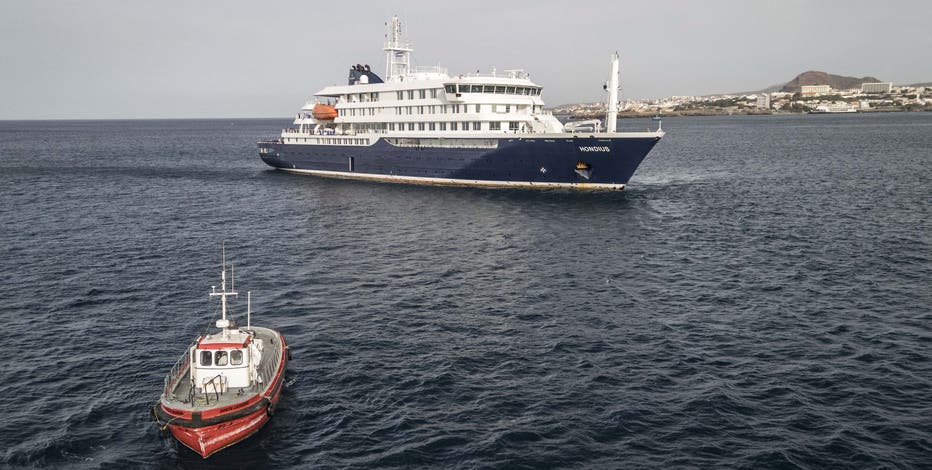
Hantavirus outbreak: 3 more patients evacuated from cruise ship
Three patients were evacuated to Europe Wednesday from the cruise ship experiencing a rare hantavirus outbreak.
Andes Strain Hantavirus
The outbreak has thrust the Dutch-flagged MV Hondius into the international spotlight. The ship, which departed Argentina on April 1 for a polar cruise, is currently stationary off the coast of Cape Verde.
As of Wednesday, the World Health Organization reported eight total cases, five of which have been laboratory-confirmed as the Andes strain of hantavirus. Three people have died.
While most hantaviruses are spread through contact with infected rodent droppings or urine, the Andes strain is unique for its ability to spread between humans.
What they're saying:
"It typically requires close, prolonged contact with a person who is actively sick with the disease," DSHS said in a statement. "It is not known to spread through casual contact such as shaking hands or being in the same room for a few minutes."
Investigators are focusing on the theory that the outbreak began during a land excursion before the ship set sail.
Argentine officials told The Associated Press that a Dutch couple may have contracted the virus during a bird-watching tour in Ushuaia, Argentina. The couple reportedly visited a landfill during the tour, where they may have been exposed to infected rodents.
WHO’s director of epidemic and pandemic preparedness, Dr. Maria Van Kerkhove, noted that officials have been told there are no rats aboard the vessel, further supporting the theory that the virus was introduced by a passenger who was already infected.
What's next:
DSHS officials stated they will not release the names or specific locations of the two Texas residents to protect their privacy.
For the passengers remaining on the MV Hondius, the situation remains restricted. The WHO confirmed Wednesday that three additional suspected patients were evacuated for medical care in the Netherlands, while the remaining passengers continue to isolate in their cabins.
Despite the fatalities and the potential for human-to-human transmission, WHO officials emphasized that the overall public health risk to the general population remains low.
The Source: Information in this article is from the Texas Department of State Health Services. Information was also taken from World Health Organization officials in statements posted on social media. Background information was taken from The Associated Press and previous FOX Television Station reporting.