

Archaeologists discover second intact Battle of the Alamo cannonball in three months
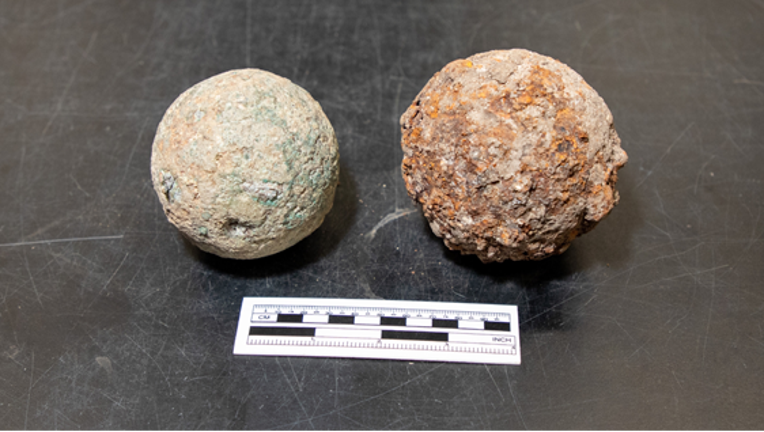
The two cannonballs side by side. The left was discovered on March 5, and the right was discovered on June 2. (Source: The Alamo)
SAN ANTONIO, Texas - Archaeologists at the Alamo have unearthed a second intact battle-era cannonball in less than three months, officials announced.
Second cannonball found
What we know:
The latest artifact, a solid iron cannonball, was discovered June 2 outside the northeast corner of the historic Alamo Church. It was found in an excavation unit adjacent to where researchers uncovered a solid bronze cannonball on March 5—one day before the 190th anniversary of the historic 1836 battle.
"A cannonball is maybe a once-in-a-lifetime — or in my case, a twice-in-a-lifetime — discovery," said Dr. Tiffany Lindley, the Alamo's director of archaeology.
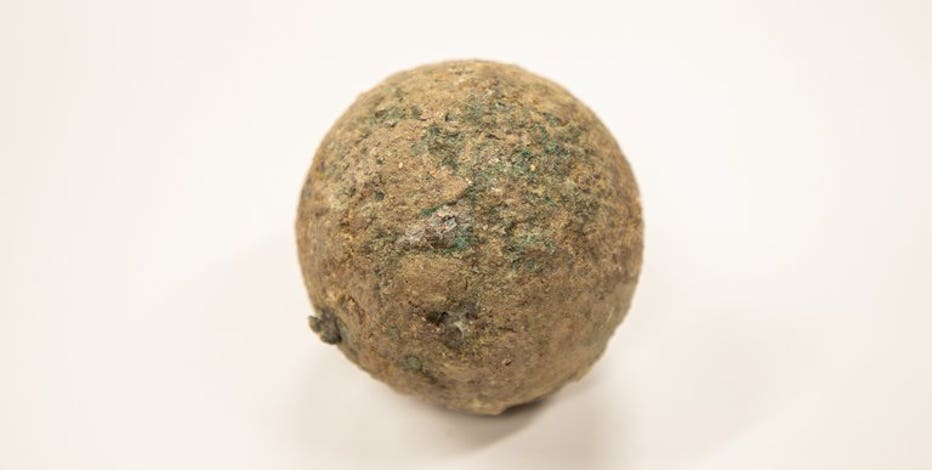
Cannonball 'very likely' fired in 1836 Battle of the Alamo found buried near church
Archaeologists have uncovered a historic cannonball at the Alamo — an artifact that was likely fired during the 1836 battle.
Both artifacts were found at roughly the same depth in a "clean deposit," meaning the layers of soil over time have remained undisturbed. Lindley noted that the soil integrity indicates the cannonballs are likely in their original locations from when they were first dropped or fired during the Texas Revolution.
Experts are still analyzing the sizes and origins of the projectiles, but initial assessments suggest they belonged to opposing sides of the conflict.
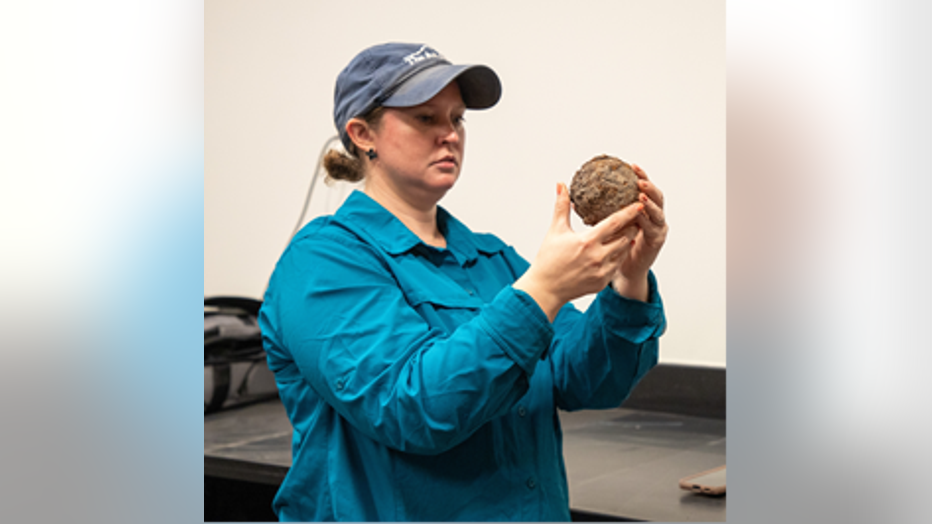
Director of Archaeology Dr. Tiffany Lindley examines the latest cannonball discovery, the second in three months.(Source: The Alamo)
While the two cannonballs are comparable in weight, the newly discovered iron piece is slightly larger and was likely fired from a six-pound cannon, according to Kolby Lanham, senior researcher and historian for the Alamo.
What they're saying:
"The likelihood is that the bronze one belonged to the Mexican Army and the iron one belonged to the Texans at some point," Lanham said, adding that soil data and primary Mexican military sources point to their use during the 1836 siege and battle.
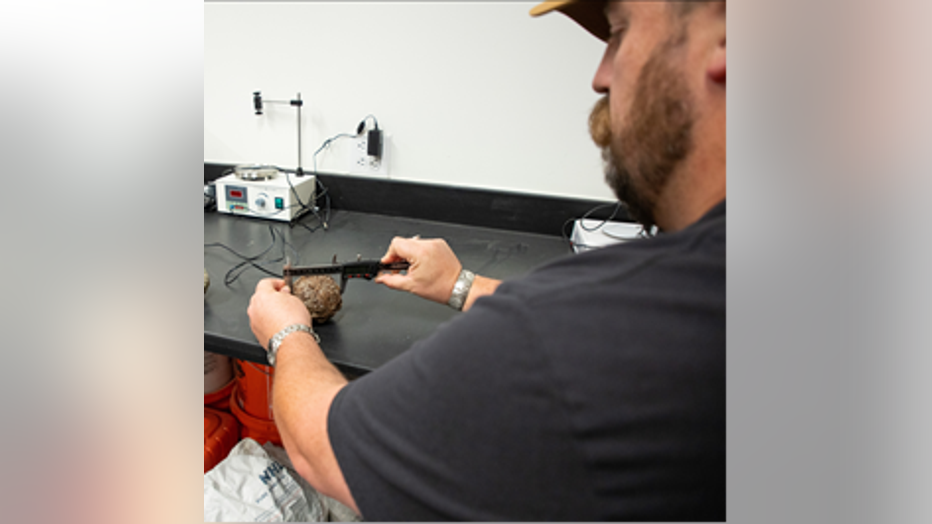
Senior Researcher and Historian Kolby Lanham measures the iron cannonball with a pair of digital calipers. (Source: The Alamo)
The discoveries come amid ongoing archaeological excavations tied to the preservation of the Alamo Church and Long Barrack, as well as construction for the site's $700 million master redevelopment plan.
The state historic site, which is overseen by the nonprofit Alamo Trust, Inc., welcomes more than 1.6 million visitors annually.
The Source: Information in this article is from The Alamo.