

AI brain implant helps paralyzed man move, feel again after years
Paralyzed man able to move, touch again with AI
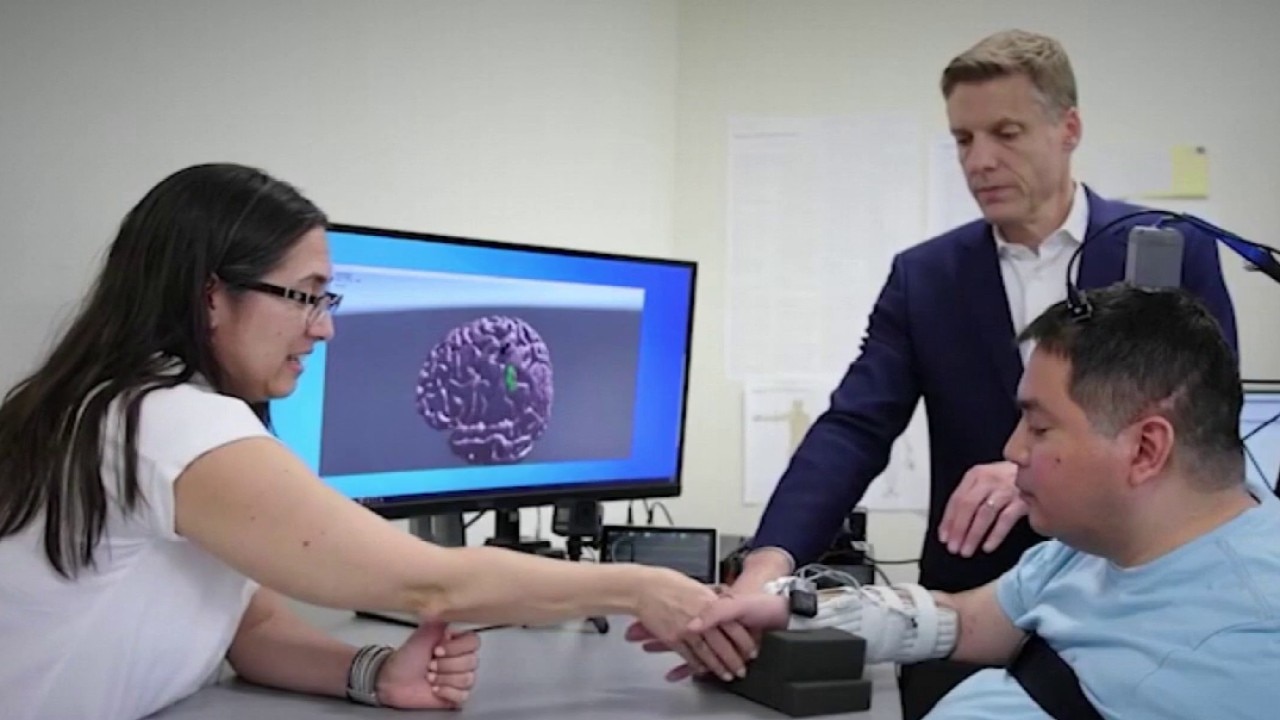
A man paralyzed after a diving accident is able to move his hand and feel touch again for the first time in years thanks to artificial intelligence. Melissa Wilson spoke with the lead researcher about this breakthrough.
HOUSTON - Medical science has achieved a major breakthrough by successfully utilizing a double neural bypass to circumvent severe spinal cord damage.
AI restores movement in paralyzed man
The technology works by implanting microchips into the motor and sensory areas of the brain to capture electrical activity. By routing these signals through an artificial intelligence system, researchers decode what a patient is thinking and send those instructions directly to flexible electrode patches on the spine and forearm muscles.
This hybrid brain-computer interface closes the loop by sending sensory feedback from fingertip sensors back to the brain, restoring the literal sense of touch. The therapeutic gains have proved to be long-lasting, showing that the technology promotes actual neuroplasticity by rewiring the nervous system over time.
What they're saying:
"We just announced that we have a three and a half year study, and we found that a technology called the double neurobypass technology can restore movement and sensation in someone who has a complete spinal cord injury.
Keith Thomas lives here in New York and is a very special individual. But unfortunately, he had a spinal cord injury from a diving accident several years ago. And we were able to enroll him into a first of its kind clinical study, where we implanted tiny chips into his motor and sensory areas of his brain, and we literally created an electronic bridge from those chips to his body and his spinal cord, and we were able to stimulate these areas and restore movement, increase his strength, and even restore the sense of touch in his hand and wrist areas.
We're using AI for medical areas and applications where we can actually improve someone's outcomes and their daily lives," says Dr. Chad Bouton, Vice President of Advanced Engineering and Technology with Feinstein Institutes for Medical Research at Northwell Health.
The Source: Melissa Wilson spoke one-on-one with Dr. Chad Bouton.