

New World Cup rules: What fans need to know about VAR, time-wasting and red cards
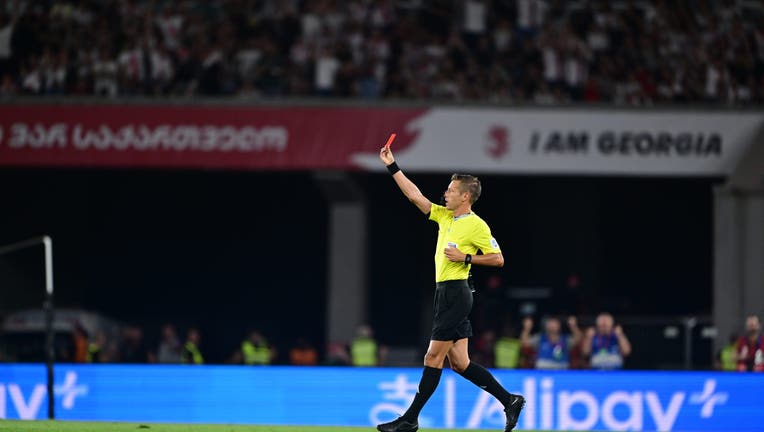
TBILISI, GEORGIA - SEPTEMBER 4: Referee Davide Massa shows a red card to Turkiye's Baris Alper Yilmaz during the 2026 FIFA World Cup UEFA Qualifiers Group E match between Georgia and Turkiye at Boris Paichadze National Stadium in Tbilisi, Georgia, on
WASHINGTON, D.C. - The 2026 FIFA World Cup will not just be bigger. It will also look a little different on the field.
With the tournament expanding to 48 teams and being played across the United States, Canada and Mexico, fans will also see several new rule changes involving time-wasting, injuries, substitutions, VAR and player conduct.
What we know:
The International Football Association Board, known as IFAB, approved changes to the Laws of the Game for 2026/27.
FIFA said the changes will be implemented at the 2026 World Cup and are intended to improve match flow and protect effective playing time.
That means fans could see referees counting down restarts, substitutes being delayed if players leave too slowly, injured players spending more time off the field and VAR stepping in on a few more types of decisions.
Here are some of the biggest rule changes fans should know.
Goal kicks and throw-ins can trigger a countdown
Teams that take too long on goal kicks or throw-ins can now be punished.
If the referee believes a team is delaying a goal kick or throw-in, the referee will whistle and begin a visible five-second countdown with a raised hand.
If a throw-in is not taken by the end of the countdown, the throw-in goes to the opposing team.
If a goal kick is not taken by the end of the countdown, the opposing team gets a corner kick.
That could create some chaotic moments, especially if a goalkeeper or defender is slow to restart play near the end of a close match.
Substituted players have 10 seconds to leave
Substitutions will also be watched more closely.
A player being substituted must leave the field within 10 seconds of the substitution board being shown, unless there is a safety, security or injury reason.
If the player does not leave in time, the player still has to come off, but the substitute cannot immediately enter the match.
Instead, the substitute has to wait until the first stoppage after one minute of play has elapsed.
In other words, a team trying to waste time with a slow substitution could briefly leave itself playing with 10 players.
Injured players may have to stay off longer
Another change deals with players who receive treatment or cause play to stop because of an injury.
Except in certain situations, a player who is treated or assessed on the field must leave and can only re-enter one minute after play restarts.
There are exceptions, including goalkeeper injuries and cases where a player is injured by a physical offense that results in a yellow or red card.
The rule is meant to reduce delays and discourage tactical injury stoppages.
VAR will have a wider role
VAR will still not review everything, but its role is expanding.
Under the new rules, VAR may review a red card that results from a clearly wrong second yellow card.
VAR may also review cases of mistaken identity when the wrong player is shown a yellow or red card.
Competitions also have the option to allow VAR to review a clearly incorrect corner kick, but only if the decision can be corrected immediately and without delaying the restart.
That last part matters. This is not a full review of every corner or every yellow card. It is a limited expansion.
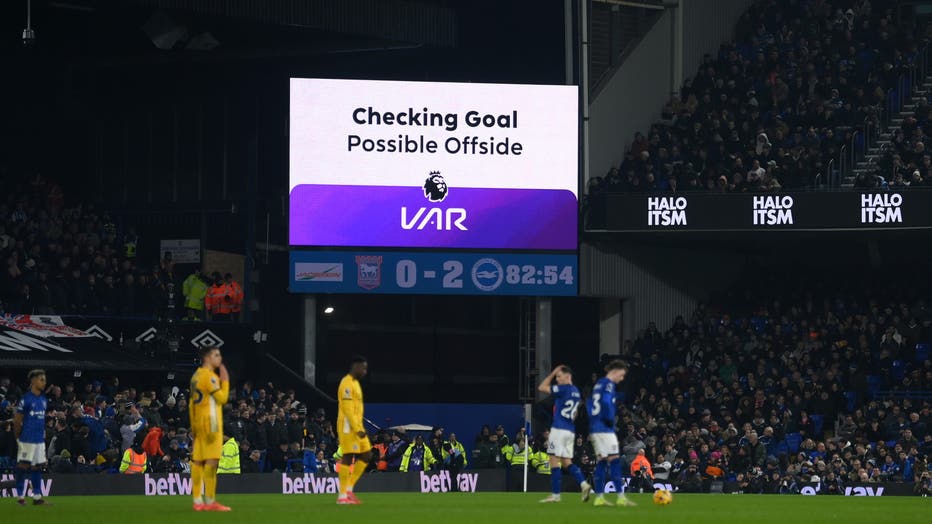
IPSWICH, ENGLAND - JANUARY 16: The LED screen inside the stadium displays a message that a VAR check is underway for the goal scored by Georginio Rutter of Brighton & Hove Albion (not pictured) for a possible offside during the Premier League
Mouth covering could be punished
Players who cover their mouths during confrontational situations with opponents may also face punishment, depending on the competition rules.
The change is aimed at confrontational moments where players cover their mouths while speaking to opponents, making it harder for officials or investigators to determine what was said.
At the discretion of the competition organizer, that conduct could be punished with a red card.
Walking off in protest could bring punishment
Players who leave the field to protest a referee’s decision may also face serious discipline, depending on competition rules.
Team officials who encourage players to leave the field can also be sanctioned.
If a team causes a match to be abandoned, it would normally forfeit the match.
Jewelry and accessories rules are changing
The rules around player equipment are also being adjusted.
Accessories such as bracelets, wedding bands and small earrings can be allowed if they are not dangerous and are safely and securely covered.
Dangerous items still have to be removed.
Referees could use body cameras
Competitions may also allow referees, assistant referees and fourth officials to wear body cameras.
IFAB says competition organizers would have to supply the cameras and control the footage. The footage and sound could be used for disciplinary matters, but VAR communication cannot be broadcast.
What it means for fans
The most noticeable changes will probably be the countdowns.
A five-second countdown on a delayed goal kick or throw-in gives fans something clear to watch, and the punishment is immediate. A slow throw-in can become the other team’s throw. A delayed goal kick can become a corner.
The substitution rule could also create drama late in matches if a player walks off too slowly and the replacement is forced to wait.
The VAR changes may get the most attention, but they are narrow. VAR is gaining a few more tools, not unlimited power to re-officiate the match.
What's next:
The 2026 World Cup begins June 11 and will be played across the United States, Canada and Mexico.
Fans should expect some of these changes to be explained often during broadcasts, especially the first time a restart countdown, substitution delay or expanded VAR review affects a match.
The Source: This article was written using information from FIFA, IFAB and the 2026/27 Laws of the Game changes.